
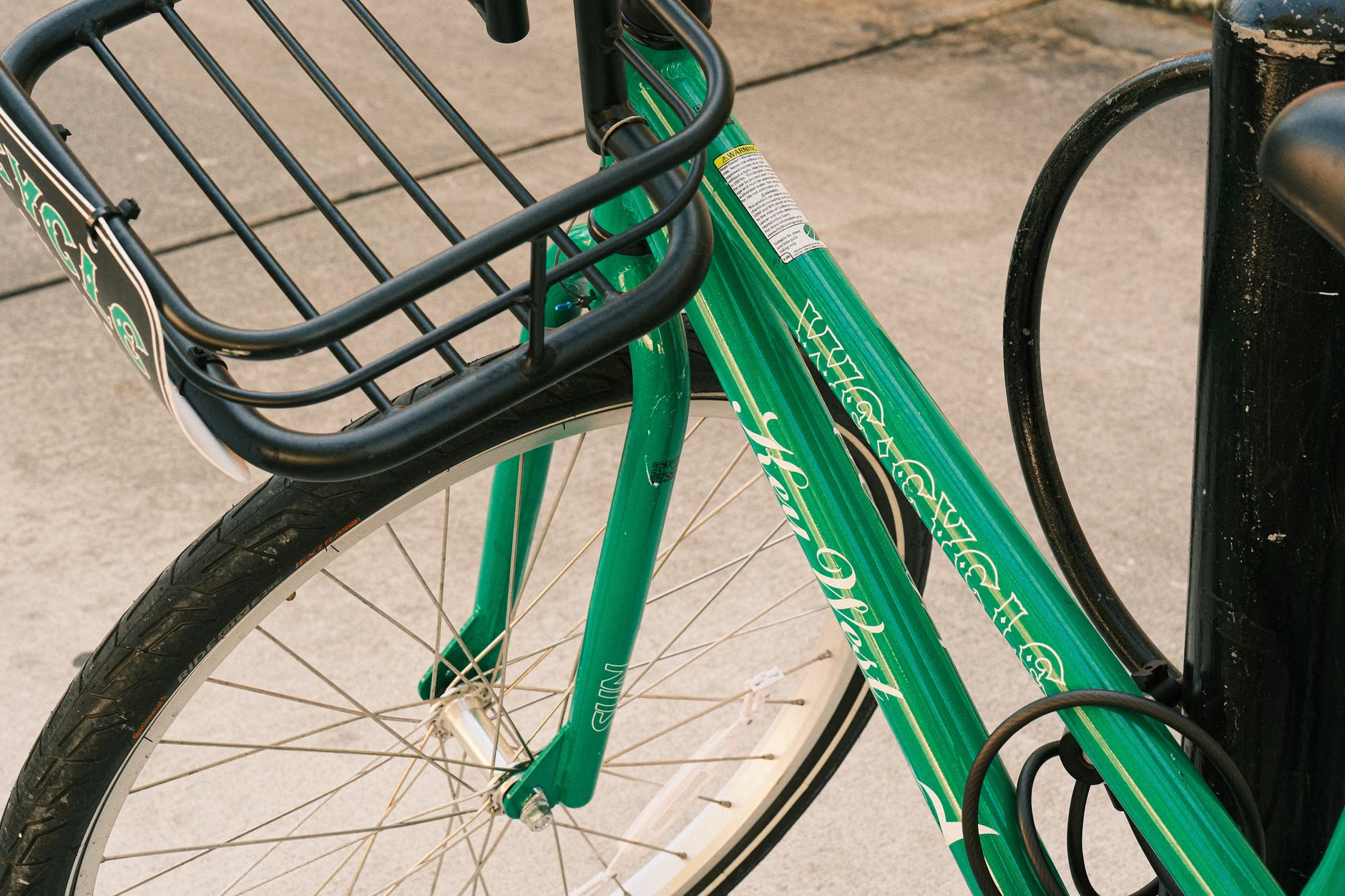
Preventing bike theft is less about finding one magic lock and more about eliminating easy opportunities. A thief looking for a quick win is scanning for predictable mistakes: a bike locked by the wheel, a cable-only setup, a detachable front wheel, an exposed garage, or a shared bike room that riders treat like a private vault. Police guidance is consistent on the basics: use strong locks, secure the frame and wheels to something fixed, register the bike, and take home security seriously too. (met.police.uk)
Table of Contents
- TL;DR
- The real goal is to become the harder target
- Use the Harder Target Check before you buy hardware or choose a parking spot
- Match the lock system to the risk, not just the bike
- How to lock a bike in the city so the lock actually helps
- Home storage deserves street-level thinking
- Registration and documentation do not stop theft, but they matter anyway
- Mistakes that quietly undo expensive security
- A 20-minute anti-theft reset to do this week
- FAQ
- References
TL;DR
- Use at least one high-quality U-lock or D-lock, and in higher-risk city parking use two locks with different locking mechanisms. That forces a thief to spend more time and often bring more than one tool. (met.police.uk)
- Lock the frame and both wheels to a sturdy, fixed rack or anchor. Locking only a wheel can leave the rest of the bike easy to steal. (nyc.gov)
- At home, a locked shed or garage is only the first layer. The bike itself should still be secured to an internal ground, wall, or stand anchor if possible. (met.police.uk)
- Record the serial number, keep photos and receipts, and register the bike with a reputable registry or local police program. Registration does not stop theft on its own, but it improves proof of ownership and recovery. (police.utdallas.edu)
The real goal is to become the harder target
A good anti-theft setup does three things: it increases the time needed to steal the bike, increases the number of tools or steps required, and increases the chance that someone sees the attempt. That is why police advice keeps returning to double locking, visible parking, secure anchors, and indoor storage when a bike will sit for longer periods. Even strong locks are not theft-proof; they buy time and reduce opportunity. (met.police.uk)
That principle matters at home just as much as it does on the street. Riders often spend heavily on a lock for commuting, then leave the same bike in a shed with a weak padlock, exposed hinges, and no internal anchor. Metropolitan Police guidance specifically warns that sheds and garages are often less secure than homes and recommends stronger locks, attention to hinges and windows, alarms, and locking the bike itself inside the structure. (met.police.uk)
Use the Harder Target Check before you buy hardware or choose a parking spot
A useful editorial rule of thumb is the Harder Target Check. It is not a formal industry standard. It is simply a quick way to judge whether a setup discourages theft or quietly invites it.
- Attachment: Is the frame secured to something genuinely fixed, not just convenient? A solid bike rack is very different from a removable signpost, loose pole, railing, or weak shed door hardware. (police.louisiana.edu)
- Delay: How long would it take to remove the bike? Two quality locks, especially with different mechanisms, typically create more delay than one lock. Independent ratings matter here because they reflect testing against common theft tools. (met.police.uk)
- Exposure: How visible is the attempt? Official advice repeatedly favors well-lit, high-traffic locations and warns against leaving bikes outside overnight or for long, predictable stretches if it can be avoided. (met.police.uk)
- Recovery: If the bike disappears anyway, can the owner prove it is theirs quickly? A serial number, photos, receipts, and registration are what turn an anonymous bike into identifiable property. (police.utdallas.edu)
If a setup fails even one part of that check, the fix is usually obvious. A great lock on a bad anchor is still a bad setup. A well-hidden garage without an internal anchor is still vulnerable. A premium e-bike locked correctly but never documented can still be hard to recover. That is why the best theft prevention feels layered rather than clever.
Match the lock system to the risk, not just the bike
For most urban riders, the starting point is a quality U-lock or D-lock. Multiple police and university security guides recommend them because they are harder to defeat quickly than basic cable locks, and cable-only setups are widely treated as weak in higher-risk areas. If the bike is parked in a city for daily errands, commuting, or all-day storage, one strong U-lock should be considered the minimum, not the full answer. (police.utdallas.edu)
In busier or more predictable parking situations, two locks are better than one, especially if they use different mechanisms. Metropolitan Police advice recommends double locking and notes that thieves are less likely to carry multiple tools, while Harvard University Police similarly advises two locks with different locking mechanisms. That does not mean any two locks will do. A thin cable added to a weak primary lock is still a weak setup. (met.police.uk)
Independent testing is worth paying for. Sold Secure says its bicycle security ratings run from Bronze through Diamond, with higher grades tested against more demanding threat levels and tool lists. That kind of rating is more useful than guessing from lock size or brand reputation alone. It also helps frame a realistic expectation: a higher-rated lock resists attack better, but no portable lock should be treated as a guarantee. (soldsecure.com)
| Situation | Recommended setup | Why it fits | Common weak point |
|---|---|---|---|
| Quick errand in a busy commercial area | One strong U-lock through the frame and rear wheel to a fixed rack; take lights and bags | Fast to use, decent against opportunistic theft | Front wheel or accessories left unsecured |
| Daily commute or several hours outside | Strong U-lock plus a second lock for the front wheel; visible rack with foot traffic | Better for predictable parking and wheel-theft risk | Using the same isolated rack every day |
| High-value road bike, gravel bike, or e-bike | Two quality locks with different mechanisms; remove display, lights, and removable battery if applicable | Higher value justifies more delay and a less resale-ready appearance | Large frame leaves too much empty space inside the lock, or components detach easily |
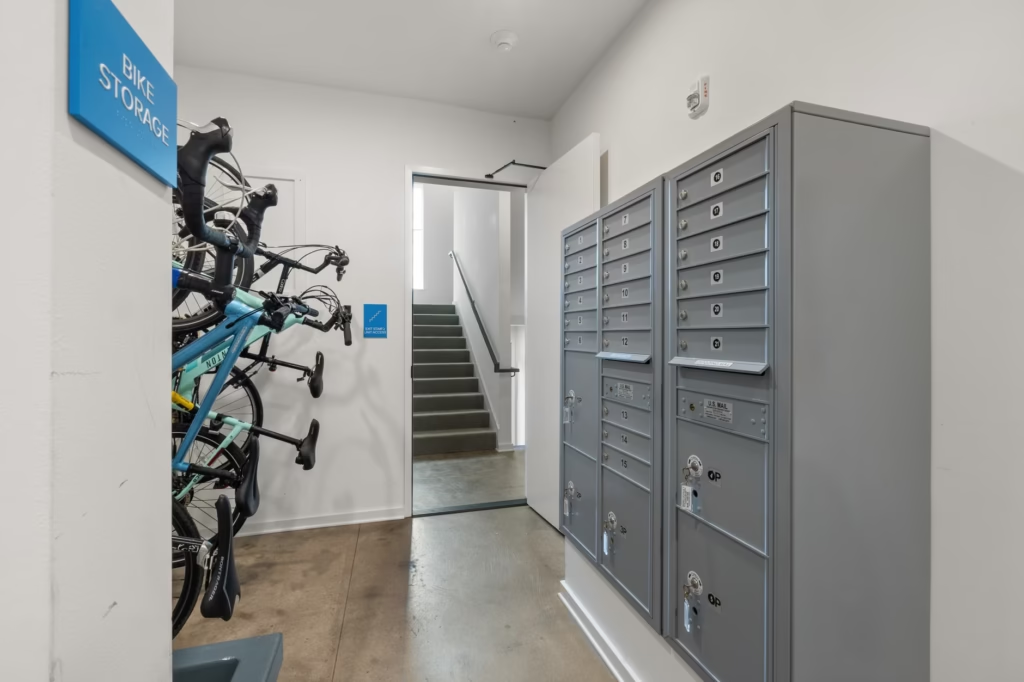
| Shared bike room or apartment garage | Lock to an internal rack or anchor even inside the room | Controlled access is still shared access | Treating the room door as the only security layer |
| Shed or detached garage overnight | Locked structure plus an interior ground or wall anchor, concealed contents, and stronger hinge and door security | Home thieves often exploit weaker outbuildings and extra time | Thin padlock, exposed screws, or an unsecured bike inside the building |
A strong lock buys time. It does not make outdoor overnight storage low risk. If a bike will sit outside at night, official guidance favors storing it indoors whenever possible. (nyc.gov)
How to lock a bike in the city so the lock actually helps
- Choose the right anchor first. Use a purpose-built bike rack or another firmly affixed object where local rules allow it. Avoid removable or weak objects, including loose signposts and questionable poles. (police.louisiana.edu)
- Lock the frame, not just the wheel. NYPD guidance is blunt on this point because thieves can leave the locked wheel behind and take the rest of the bike. (nyc.gov)
- Include both wheels if possible. Metropolitan Police advises locking the frame and both wheels, and a second lock or secondary cable can help secure the front wheel. (met.police.uk)
- Keep the lock tight to the bike and close to the stand. The goal is to reduce room for tools and awkward leverage. Metropolitan Police specifically advises securing the bike as close to the stand as possible. (met.police.uk)
- Remove the easy parts. Take detachable lights, bags, baskets, saddles, or removable e-bike batteries and displays if the design allows it. Quick-release parts are invitation points. (met.police.uk)
- Pick the location as carefully as the lock. Look for visibility, foot traffic, and legitimate bike parking. If the bike will be there often, avoid building a predictable pattern around a single isolated rack. (met.police.uk)
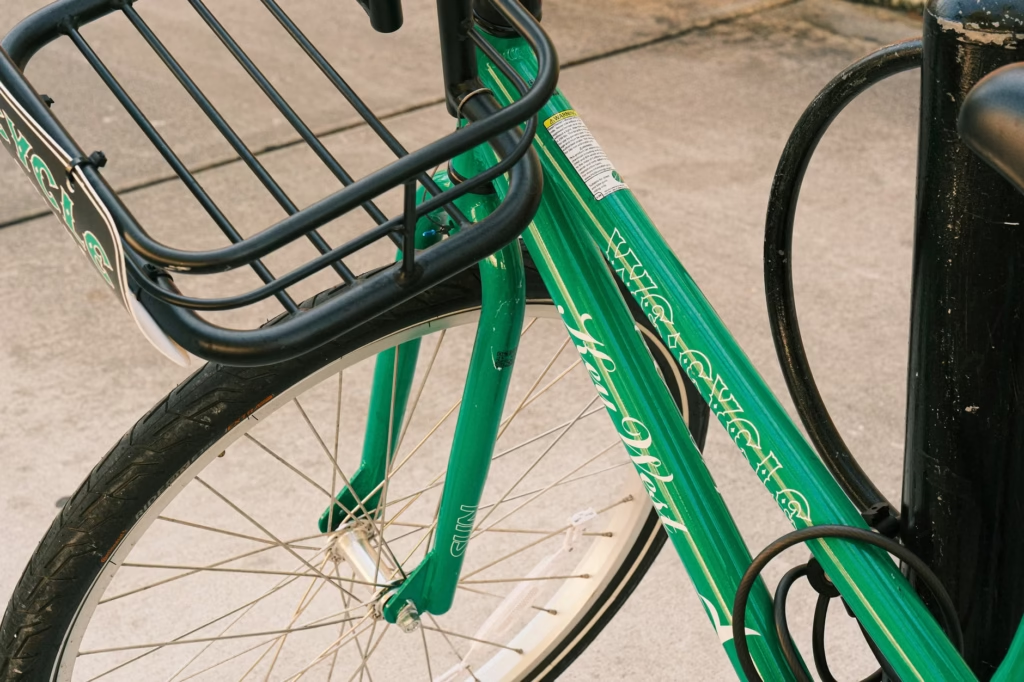
A useful example is the rider who commutes on an expensive e-bike and locks to the same rack outside the station every weekday. The risk is not just the bike’s value. It is the routine. The bike is visible, predictable, and worth planning around. In that case, a second lock, a less isolated rack, and removal of the battery or display are not overkill. They are the difference between routine parking and broadcasting a habit. (nyc.gov)
Home storage deserves street-level thinking
The safest home storage is usually inside the living space if that is practical and allowed. The next best option is a truly secure garage, shed, or bike room that adds real delay, not just a door. Police guidance on sheds and garages recommends stronger door security, attention to hinges and windows, keeping the structure locked at all times, and securing the bike itself to the ground or a lockable stand inside. (met.police.uk)
That last part is the one many riders skip. An attached garage or basement room feels private, so the lock comes off. But if someone gets through the outer door, the bike is then grab-and-go property. A ground or wall anchor inside the space makes that entry only the first step, not the whole theft. If the bike lives in a detached shed, that extra layer matters even more. (met.police.uk)
Home security also includes what can be seen from outside and what gets shared online. Metropolitan Police specifically advises avoiding signals that a bike is stored at home, including visible roof racks, and recommends privacy zones on apps such as Strava. Strava’s own privacy tools let riders hide sensitive locations such as home or work on activity maps. (met.police.uk)
If the bike is stored in a shed, garage, or outbuilding, it is also worth checking insurance before assuming the loss would be covered. Metropolitan Police explicitly recommends confirming whether shed or garage contents are insured. Insurance is not theft prevention, but it changes how much loss remains if prevention fails. (met.police.uk)
Do not over-trust a shared bike room
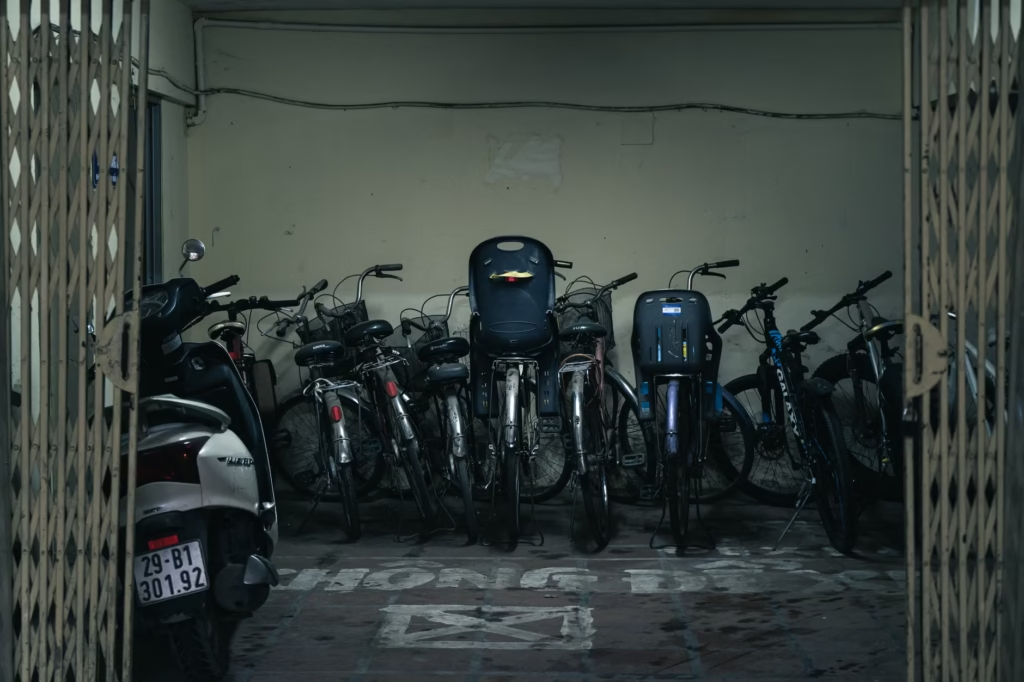
A building bike room is usually a convenience feature, not a private locker. Harvard University Police requires registration for access to certain bike shelters and cages but still advises two locks with different locking mechanisms. That is a good model for how to think about shared storage generally: the room reduces casual access, but the bike still needs its own security. (hupd.harvard.edu)
Registration and documentation do not stop theft, but they matter anyway
The serial number is the anchor for recovery. USC Department of Public Safety says it is the best chance at recovering a stolen bicycle and notes that it is usually found under the bottom bracket, with other common locations including the headset or rear stays. UT Dallas similarly calls the serial number the most important identifying information and recommends saving photos as the bike changes over time. (dps.usc.edu)
- Record the serial number and exact make and model. (police.utdallas.edu)
- Photograph the whole bike plus distinctive scratches, upgrades, bags, racks, and other accessories. (police.utdallas.edu)
- Keep receipts for the bike, service work, and major accessories. (police.utdallas.edu)
- Register the bike with a reputable registry such as Bike Index or Project 529, or with a local police or campus program if one exists. (police.utdallas.edu)
Registration is useful, but it has limits. The U.S. Department of Justice Problem-Oriented Policing guide notes that registration works best when participation is broad, marks are hard to remove, and police or secondhand markets actually use the system. It may do little to prevent theft if thieves do not know about the program, and it is less helpful when bikes are stripped for parts because the frame is typically what gets registered. (popcenter.asu.edu)
Mistakes that quietly undo expensive security
- Using a cable as the main lock in a city environment. Cable locks are widely treated as easy targets compared with better U-lock or chain systems. (uwpd.wisc.edu)
- Locking the front wheel only. This is one of the oldest and still most common errors. (nyc.gov)
- Leaving quick-release components, lights, or portable batteries on the bike. (met.police.uk)
- Locking to whatever is nearby instead of what is secure. A bad anchor cancels out a good lock. (police.louisiana.edu)
- Assuming home storage is automatically safe. Sheds, garages, and bike rooms need their own layers. (met.police.uk)
- Failing to keep the serial number, photos, and receipts in one accessible place. (police.utdallas.edu)
- Sharing precise home start and end points on ride-tracking apps. (met.police.uk)
A 20-minute anti-theft reset to do this week
- Photograph the bike, the serial number, and any distinctive parts. (police.utdallas.edu)
- Save the receipt and serial number in a phone note, cloud folder, or password manager attachment. (police.utdallas.edu)
- Register the bike with a registry or local police program. (uwpd.wisc.edu)
- Check whether the current lock setup captures the frame and both wheels. If not, add a second lock or change the setup. (met.police.uk)
- Look at the home storage area like a thief would: hinges, screws, windows, visibility, and whether the bike itself is anchored. (met.police.uk)
- Turn on a privacy zone for home and work in Strava or a similar app. (strava.com)
Bike theft prevention is mostly disciplined, boring work, which is exactly why it works. Stronger locks, better locking technique, less predictable parking, better home storage, and clean ownership records do not make a bike impossible to steal. They make it harder to steal, harder to sell, and easier to recover. For most riders, that is the right standard to aim for. (met.police.uk)
FAQ
Is one expensive lock enough?
Sometimes for a very short stop in a lower-risk setting, but not as a general city strategy. Official guidance from Metropolitan Police and Harvard University Police favors two locks in higher-risk conditions because extra time and tool changes matter. (met.police.uk)
Are cable locks ever useful?
Yes, but usually as a secondary layer for a wheel or accessory rather than the only line of defense in a city. UW – Madison Police says cable locks are easily cut with the right tools, while UTEP suggests a secondary cable used together with a heavy-duty primary lock. (uwpd.wisc.edu)
Should I still lock my bike inside a garage or bike room?
Usually yes. Metropolitan Police advises securing the bike itself inside a locked shed or garage, and Harvard University Police still recommends two locks for shared shelters and cages. Shared or semi-private storage should be treated as one layer, not the whole system. (met.police.uk)
Does bike registration actually prevent theft?
Not by itself. Registration is better understood as a recovery and proof-of-ownership tool. The DOJ problem-solving guide says registration works best when participation is broad and the system is actively used, but it may not deter thieves who are unaware of it or who strip bikes for parts. (popcenter.asu.edu)
What should I do first if my bike is stolen?
Report it to police quickly, provide the serial number, photos, and any distinctive details, and update the bike’s status in the registry you used. Metropolitan Police and university police guidance all emphasize fast reporting and complete identification details. (met.police.uk)
References
- Metropolitan Police – Protect your bike from theft – https://www.met.police.uk/cp/crime-prevention/keeping-vehicles-safe/how-safe-is-your-bike/?intcmp=75744
- Metropolitan Police – Keeping your shed or garage safe and secure – https://www.met.police.uk/cp/crime-prevention/protect-home-crime/secure-shed-garage/
- NYPD – Bicycle Theft Prevention PDF – https://www.nyc.gov/html/nypd/downloads/pdf/crime_prevention/biketheftprevention.pdf
- Sold Secure – Ratings Explained – https://soldsecure.com/ratings
- Strava – Privacy Center – https://www.strava.com/privacy-center?hl=en-GB
- Strava Help Center – Edit Map Visibility – https://support.strava.com/en-us/articles/15402012-edit-map-visibility?mobile_site=true
- University of Texas at Dallas Police – Bike Theft Prevention – https://police.utdallas.edu/crime-prevention/bike-theft-prevention/
- University of Louisiana at Lafayette Police – Preventing Bicycle Theft – https://police.louisiana.edu/crime-information/crime-prevention/preventing-bicycle-theft
- USC Department of Public Safety – Locating your Bicycle Serial Number – https://dps.usc.edu/services/bikeserialnumber/
- Harvard University Police Department – Bicycle & Mobility Device Registration – https://www.hupd.harvard.edu/device-registration
- UW – Madison Police Department – Prevent Bicycle Theft – https://uwpd.wisc.edu/prevent-bicycle-theft/
- UTEP Police Department – Bicycle Registration – https://www.utep.edu/police/police-services/bike-registration.html
