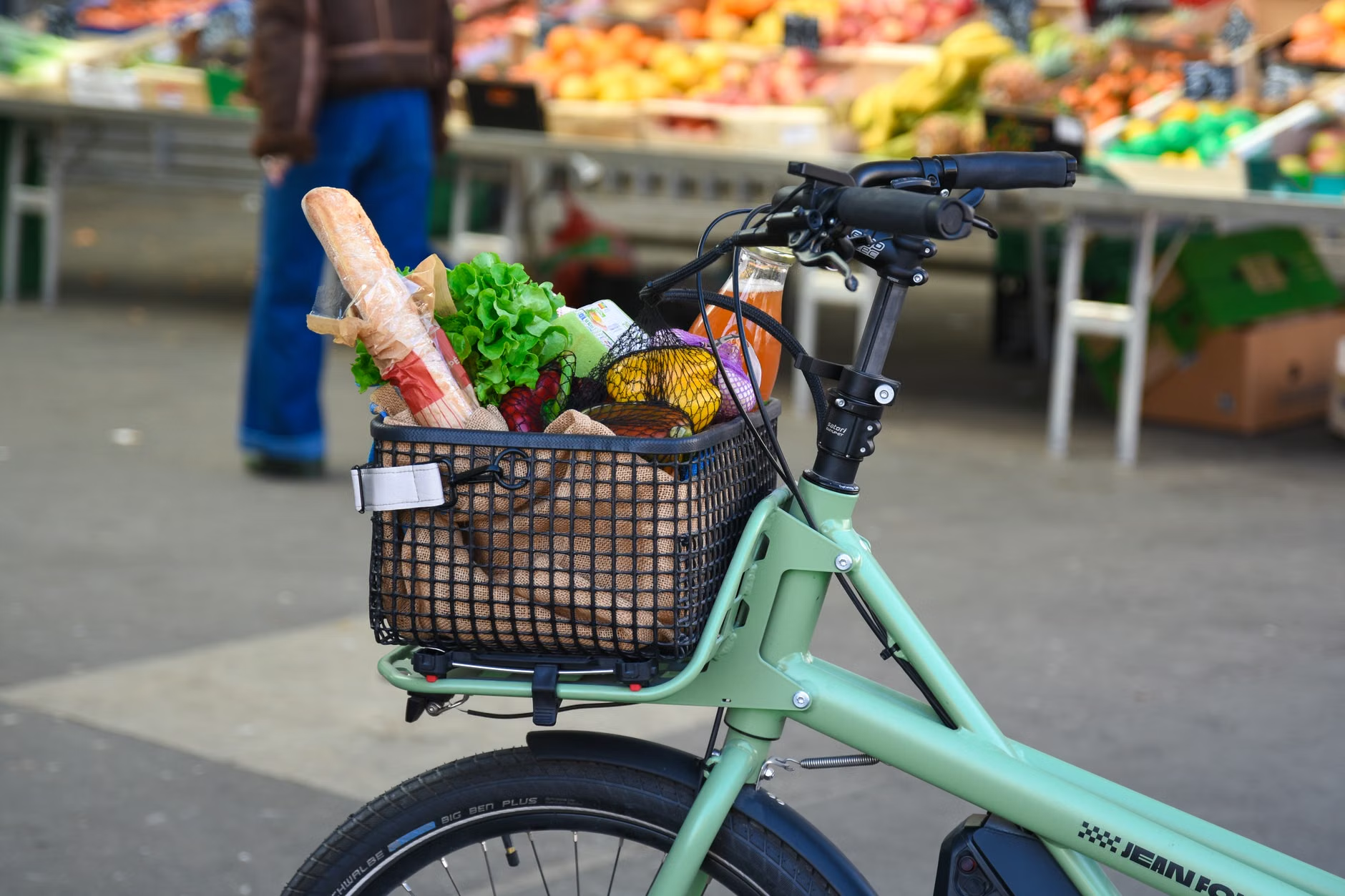
Carrying stuff on a bike is one of the quickest ways to make everyday riding more useful, but it is also one of the easiest ways to make a bike feel awkward. The right setup is rarely one universal bag. Groceries, office gear, and travel luggage ask different things of the bike: stability, weather protection, quick access, easy off-bike carrying, or sheer volume. That matters because manufacturers and cycling organizations repeatedly warn that added cargo can change steering, braking, and control, and that riders need to stay within the limits of the bike, rack, and bag system. (Bontrager 720 Rack Instructions)
- Use the Weight-Shape-Walk-Route check before buying anything
- Which carrying system matches the job
- For groceries, favor easy loading and stable weight over sleekness
- For work gear, think about weather, wrinkles, and what happens after you lock up
- For luggage and overnight loads, balance matters more than volume
- Load the bike so it still behaves like a bike
- Common failure patterns that make cargo carrying miserable
- When a trailer or cargo bike is the smarter answer
- Practical next step: build your setup in stages
- The useful answer is rarely the flashiest one
- FAQ
- References
TL;DR
- For most city riders, rear panniers are the best all-around answer for groceries and work gear because they keep weight off the body and usually feel more stable than a backpack once the load gets dense or bulky. (League of American Bicyclists)
- Use a backpack only for lighter loads, shorter rides, or when off-bike walking matters more than on-bike comfort. (League of American Bicyclists)
- Front baskets and front racks are convenient, but front weight changes steering and can increase braking distance, so they work best for lighter, well-secured loads. (League of American Bicyclists)
- For big grocery shops, bulky items, or repeated hauling, a trailer or cargo bike becomes less of a luxury and more of a friction reducer. Burley’s Travoy, for example, is rated to 60 pounds and doubles as a hand cart. (Burley Travoy)
- Before every loaded ride, check capacity limits, secure every strap and hook, keep lights visible, and do a short test ride after an A-B-C safety check. (NHTSA pre-ride safety check)
Use the Weight-Shape-Walk-Route check before buying anything
A simple way to choose a carrying system is to ask four questions in order. First, how heavy is the load? Second, is it compact and dense, or bulky and awkward? Third, what happens after the ride: does it need to be carried into an office, up stairs, or through a store? Fourth, what kind of route is involved: smooth neighborhood streets, stop-and-go downtown traffic, or longer rides where comfort matters more?
This check is more useful than shopping by liters alone because the same volume can behave very differently on a bike. A laptop, a loaf of bread, and a bag of cat litter do not belong in the same setup just because they technically fit.
- Light, short-trip, easy-to-carry loads usually suit a backpack, messenger bag, or small basket.
- Medium daily loads such as a laptop, lunch, clothes, and a lock usually suit a rear pannier or trunk bag better than body-worn luggage. (League of American Bicyclists)
- Bulky or fragile errands usually suit a basket, crate, or trailer because drop-in loading is easier than stuffing a narrow bag.
- Heavy or repeated hauling usually points toward dual panniers, a trailer, or a purpose-built cargo bike rather than trying to overload a normal rack. (ORTLIEB FAQ)
Which carrying system matches the job
| Carry system | Best use | Why it works | Main drawback |
|---|---|---|---|
| Backpack or messenger | Short commutes, light loads, mixed bike-and-walk days | No bike hardware required and easy to carry inside | Can feel hot, tiring, and unstable once the load gets heavy or dense. (Sustrans) |
| Rear pannier | Work gear, groceries, daily errands | Keeps weight off your back and usually handles dense loads well | Needs a rack, and the bag may be less convenient once off the bike. (League of American Bicyclists) |
| Rear basket or crate | Quick shopping stops, awkward packages, reusable grocery bags | Fast loading and easy access | Less weather protection and easier to overload high on the bike |
| Front basket or front rack | Small frequent-access items, light errands | You can see and reach the load easily | Front weight affects steering and can increase braking distance. (League of American Bicyclists) |
| Trailer | Large grocery runs, bulky luggage, items that do not pack neatly | Big capacity without hanging all the weight on the bike; some models also roll as carts. (Burley Travoy) | Longer overall vehicle, more storage hassle, more hitch complexity |
| Cargo bike | Frequent heavy hauling, family errands, business deliveries | Designed around load carrying instead of adapting a standard bike | Higher cost, heavier bike, and more storage space needed |
For most riders, the real answer is a two-system setup rather than one perfect product. A waterproof rear pannier for weekday commuting plus either a basket or a trailer for shopping covers more real life than forcing every job into one bag. That approach also keeps the bike adaptable: light and normal most days, more capable when the load changes.
For groceries, favor easy loading and stable weight over sleekness
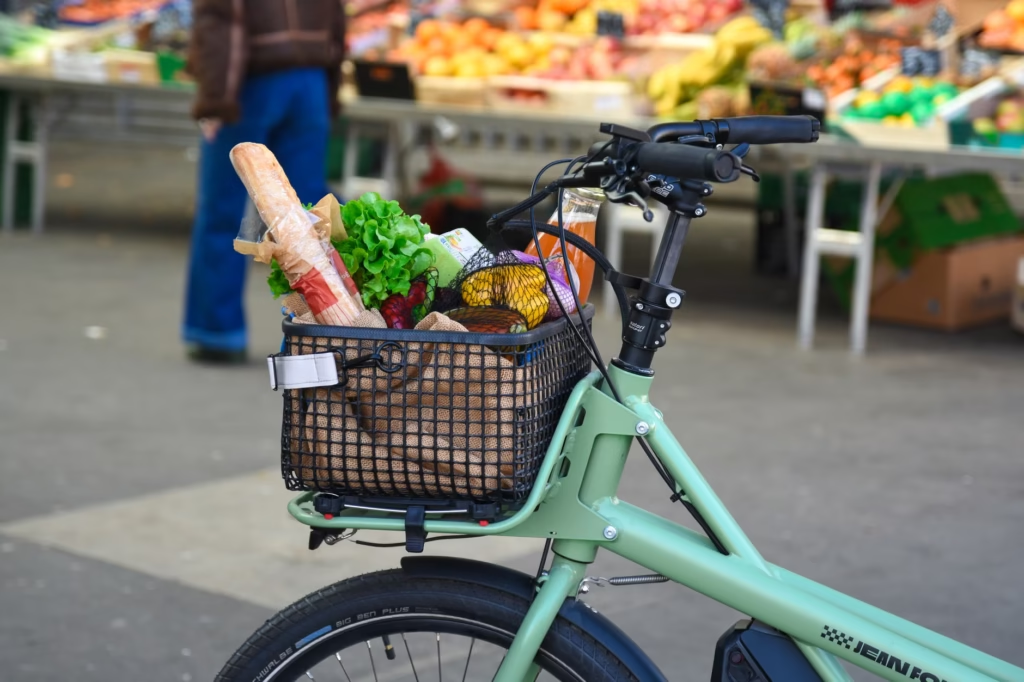
Groceries are awkward because they are rarely one kind of load. A few ingredients for dinner are light but fragile. A weekly shop can mix dense cans, delicate produce, tall bottles, and oddly shaped paper goods. For quick neighborhood stops, a basket or crate is often the simplest answer because it handles reusable bags and irregular shapes without much packing ceremony.
For a larger run, dual rear panniers are usually the sweet spot: they split the load left and right, keep your shoulders free, and make it easier to separate fragile food from dense items. The League of American Bicyclists also recommends organizing similar items within a pannier and keeping frequently used items near the top. (League of American Bicyclists)
The main mistake with grocery hauling is treating rack-top space as the whole cargo system. A very full bag piled high on top of a rear rack may technically fit, but it often rides worse than the same load divided lower in panniers. Bread, eggs, and herbs also suffer when they sit beneath dense items. A practical packing rule is simple: dense items low, crushable items last, and nothing loose enough to shift when you stand up, brake hard, or dodge a pothole.
If grocery trips regularly include bulky household items or more than a normal rack setup handles comfortably, a trailer starts to make sense. Burley’s Travoy is one example rated for 60 pounds, with tie-down straps and hand-cart use off the bike, which helps explain why trailers work so well for awkward everyday hauling. (Burley Travoy)
For work gear, think about weather, wrinkles, and what happens after you lock up
Work commuting adds a different set of priorities. The load is usually not huge, but it can be dense, expensive, and annoying to replace: laptop, charger, lunch, lock, ID badge, maybe shoes or a change of clothes. That is why a waterproof rear pannier is often the best everyday office solution. It keeps the load off the body, helps avoid the sweaty-back problem that often comes with a rucksack, and gives more structure for separating electronics from food.
Sustrans also advises rolling change-of-work clothes rather than folding them and keeping them dry inside the pannier. A backpack is still reasonable for a very short ride or a day when the trip includes lots of walking, but once the load includes a lock, laptop, and lunch, body-worn luggage usually stops feeling efficient. (Sustrans)
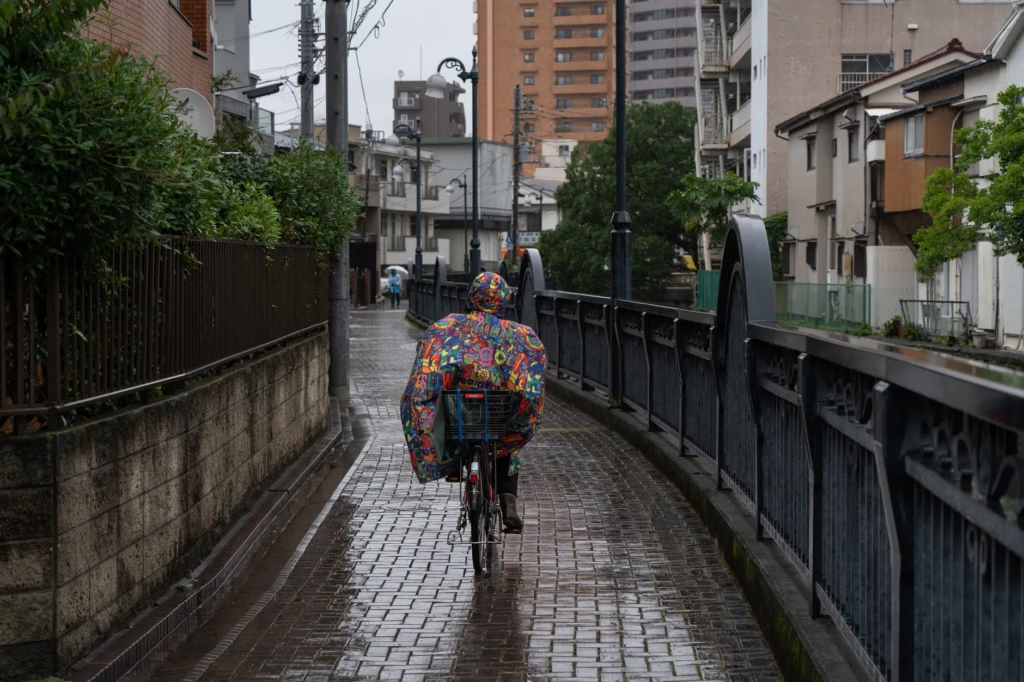
Waterproof does not mean impact-proof. A padded sleeve inside a pannier is still smart for a laptop, especially on rough streets or curb transitions.
For luggage and overnight loads, balance matters more than volume
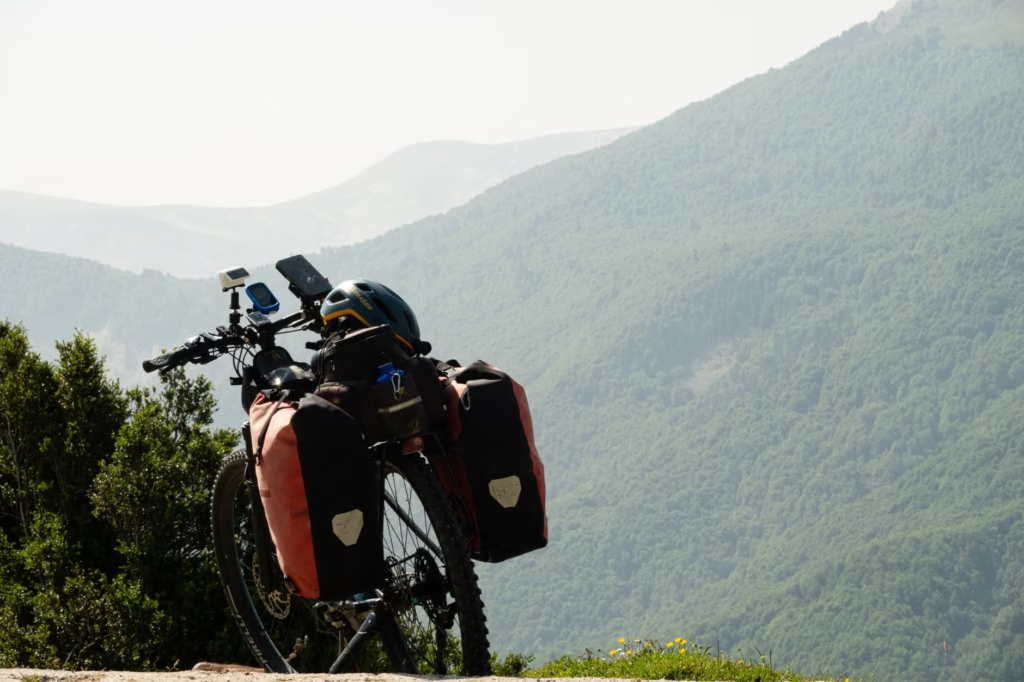
Travel loads create the biggest handling problems because riders tend to chase capacity first and stability second. A bike can feel surprisingly clumsy when all the weight sits high on the rear, even if the total number on the scale is not extreme. Manufacturers make this point in different ways. ORTLIEB notes that panniers significantly influence handling and that heavy front and rear loads can change it a lot, while Bontrager’s front-rack instructions warn that front loads can make steering slow, difficult, or unpredictable and may increase braking distance.
The lesson is not to avoid luggage, but to place it intelligently: heavier items low and centered, lighter bulky items up top, and no assumption that more liters automatically means a better setup. (ORTLIEB Back-Roller City datasheet)
A useful example is a rider using one hybrid bike for three different jobs in the same week. On Monday, the load is office gear, so one rear pannier and a small pocket bag for phone and wallet is plenty. On Wednesday, the ride includes a grocery stop, so the same rack gets a second pannier or a crate for irregular bags. On Friday, the rider heads across town for an overnight stay, and the smartest move is not one giant duffel strapped on top, but a more balanced setup: heavier clothes and toiletries down in panniers, light bulkier items on top, and only small essentials in any front bag. The bike has not changed. The load strategy has.
Load the bike so it still behaves like a bike
- Check the actual limits before you pack. Trek’s owner documentation states that bike weight limits include the rider, the bicycle, and gear or cargo, and it also notes that some e-bikes with a rear-rack battery have a lower rack load because the battery already uses part of that capacity. Look on the rack or support bracket, not just the product page. (Trek owner documentation)
- Put the heaviest items as low and as centered as the system allows. This is why panniers usually feel calmer than a single tote perched high on a rack.
- Balance side to side whenever possible. Bontrager’s 720 rack instructions explicitly tell riders to load both sides equally. (Bontrager 720 Rack Instructions)
- Secure every hook, strap, and latch. ORTLIEB says to check that mounted bags are secure and do not wobble, and Bontrager says to retighten straps every time cargo is added or removed. (ORTLIEB FAQ)
- Keep the load out of the wheel, brake, and drivetrain, and do not carry anything that blocks your vision, lights, or full control of the bike. Trek and the League both flag these issues directly. (Trek owner documentation)
- Do a short parking-lot or side-street test ride after packing. NHTSA recommends an A-B-C pre-ride check for air, brakes, and chain, followed by a test ride. (NHTSA pre-ride safety check)
Know the three different limits
- The bike limit: the total system weight the bike is designed to handle, including rider, bike, and cargo. (Trek owner documentation)
- The rack limit: the maximum load for that specific rack or rack support. On some bikes, especially certain e-bikes, the rack’s real usable capacity may be reduced by other equipment already mounted there. (Trek owner documentation)
- The bag limit: the bag hardware may have its own ceiling. ORTLIEB, for example, says Quick-Lock 2.1 and 3.1 systems allow 9 kg per bag and Quick-Lock 2.2 allows 12.5 kg per bag, but the rack manufacturer’s lower limit still controls. (ORTLIEB FAQ)
The smaller number wins. A strong pannier does not override a weak rack, and a strong rack does not override the bike’s total weight limit.
Common failure patterns that make cargo carrying miserable
- Using a backpack for every trip, even after the load has clearly outgrown it.
- Mounting everything high on top of the rear rack instead of splitting weight lower in panniers.
- Choosing a front basket for a load that is too heavy, then wondering why slow-speed steering feels strange. Front loads need more caution. (League of American Bicyclists)
- Ignoring off-bike life. A huge grocery pannier may ride beautifully and still be annoying in an office elevator or a train station.
- Forgetting visibility. Cargo should not block lights or reflectors, especially on winter commutes or store runs that finish after dark. (League of American Bicyclists)
- Packing without a shake test. If the bag shifts when the bike leans, it will shift more on rough pavement.
When a trailer or cargo bike is the smarter answer
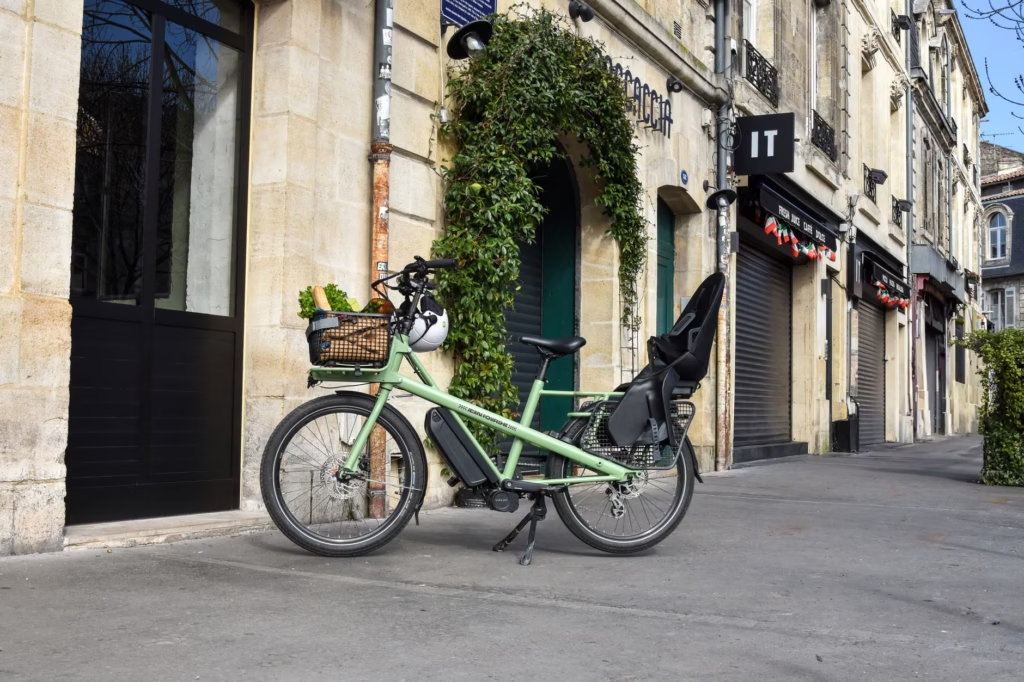
There is a point where adding better bags stops solving the problem. If the load is only occasionally too big, a trailer is usually the most economical step up because it expands capacity without requiring a second bike. The tradeoff is length, storage, and hitch setup. If heavy hauling is routine rather than occasional, a cargo bike becomes more rational because the whole machine is built around stability, parking, and load placement.
The important distinction is frequency. If hauling feels like a special mission once a month, adapt the existing bike. If it feels like normal life several times a week, the purpose-built tool starts to justify itself. Burley’s cargo-trailer examples also show why some riders like the middle ground: substantial carrying capacity with quick attach-detach convenience. (Burley Travoy)
Practical next step: build your setup in stages
- Start with the heaviest load you do at least twice a month, not the biggest fantasy trip you might do once a year.
- Check whether your current bike has rack mounts and what its overall weight limit allows. (Trek owner documentation)
- If the main job is commuting or groceries, a rear rack and one good waterproof pannier is usually the best first purchase.
- Add a second pannier, basket, or crate only after you know what the first setup does poorly.
- Move to a trailer when bulk, not convenience, becomes the recurring problem. (Burley Travoy)
The useful answer is rarely the flashiest one
The best way to carry things on a bike is the setup that keeps the load secure, the bike predictable, and the trip easy enough that you keep choosing the bike again. For most urban riders, that means rear panniers first, baskets for convenience, backpacks only for lighter days, and trailers or cargo bikes when the load stops being occasional.
Start with the job you actually do every week, pack lower than your instincts suggest, and treat handling changes as information rather than a nuisance. A bike that carries ordinary life well is usually the bike that gets ridden most.
FAQ
Is a backpack a bad idea for bike commuting?
Not automatically. It is fine for lighter loads and shorter rides, especially when the trip includes a lot of walking after parking. But for a laptop, lock, lunch, and clothes, a rear pannier usually becomes more comfortable and can help reduce the sweaty-back problem that commuting organizations often mention. (League of American Bicyclists)
Are front baskets less safe than rear panniers?
They are not inherently unsafe, but they do change the bike’s steering more directly because the load sits at the front. The League of American Bicyclists warns that front racks need extra caution when stopping suddenly, and Bontrager’s instructions note that heavy front loads can make steering slow or unpredictable and may increase braking distance. That is why front baskets are best for lighter, well-secured loads. (League of American Bicyclists)
Do I need a cargo bike to buy groceries by bike?
Usually no. Many grocery trips are well served by a basket, crate, or rear panniers. A cargo bike becomes more compelling when the load is heavy or bulky several times a week, not just once in a while. The League explicitly points riders toward racks, panniers, and baskets for everyday cargo, while trailers offer a strong middle ground for larger loads. (League of American Bicyclists)
How do I know when I am overloaded?
Check three numbers: the bike’s total weight limit, the rack’s load limit, and the bag’s own hardware limit. Trek states that total weight includes rider, bike, and cargo, and ORTLIEB notes that even if the bag hardware allows more, the rack manufacturer’s lower limit still governs. Beyond the numbers, overloaded bikes often feel slow to steer, awkward to stop, or unstable when starting from a light or climbing out of the saddle. (Trek owner documentation)
Can one setup handle commuting and weekend luggage?
Yes, if the setup is modular. A rear rack with one or two panniers covers most commuting needs, and the same base can scale to light travel by adding a second pannier or a small top bag. Just avoid stacking too much weight high on the rear and remember that added luggage changes handling. (League of American Bicyclists)
References
- NHTSA – Bicycle Safety – https://www.nhtsa.gov/road-safety/bicycle-safety
- NHTSA – Bicycle Safety: Pre-Ride Safety Check (PDF) – https://www.nhtsa.gov/sites/nhtsa.gov/files/2024-07/bike-safety-pre-ride-bicycle-check.pdf
- League of American Bicyclists – Commuting – https://bikeleague.org/ridesmart/commuting/
- Trek – Electra Owner’s Manual (PDF) – https://media.trekbikes.com/image/upload/v1696456766/EL_OwnersManual_EN-US_Oct2023_WEB.pdf
- ORTLIEB – FAQ – https://us.ortlieb.com/pages/faq
- ORTLIEB – Back-Roller City Datasheet (PDF) – https://www.ortlieb.com/downloads/datasheet/en/back_roller_city.pdf
- Bontrager – 720 Rack Instructions (PDF) – https://retailerassetsprd.blob.core.windows.net/techassets/tk14_manual_720_rack_v2_us_en.pdf?se=2062-03-20T02%3A32%3A45Z&sig=UogJIteiFltPX66np2M0a3esSu1uZzABYHTFInUlT%2Fo%3D&sp=r&spr=https&srt=sco&ss=bfqt&st=2019-03-19T18%3A32%3A45Z&sv=2018-03-28
- Burley – Travoy Cargo Trailer – https://burley.com/products/travoy
- Walk Wheel Cycle Trust – Hot summer: How to stay cool and fresh on your commute – https://www.walkwheelcycletrust.org.uk/our-blog/get-active/hot-summer-how-to-stay-cool-and-fresh-on-your-commute/
- Walk Wheel Cycle Trust – Commute by bike with confidence – https://www.walkwheelcycletrust.org.uk/our-blog/get-active/commute-by-bike-with-confidence/
