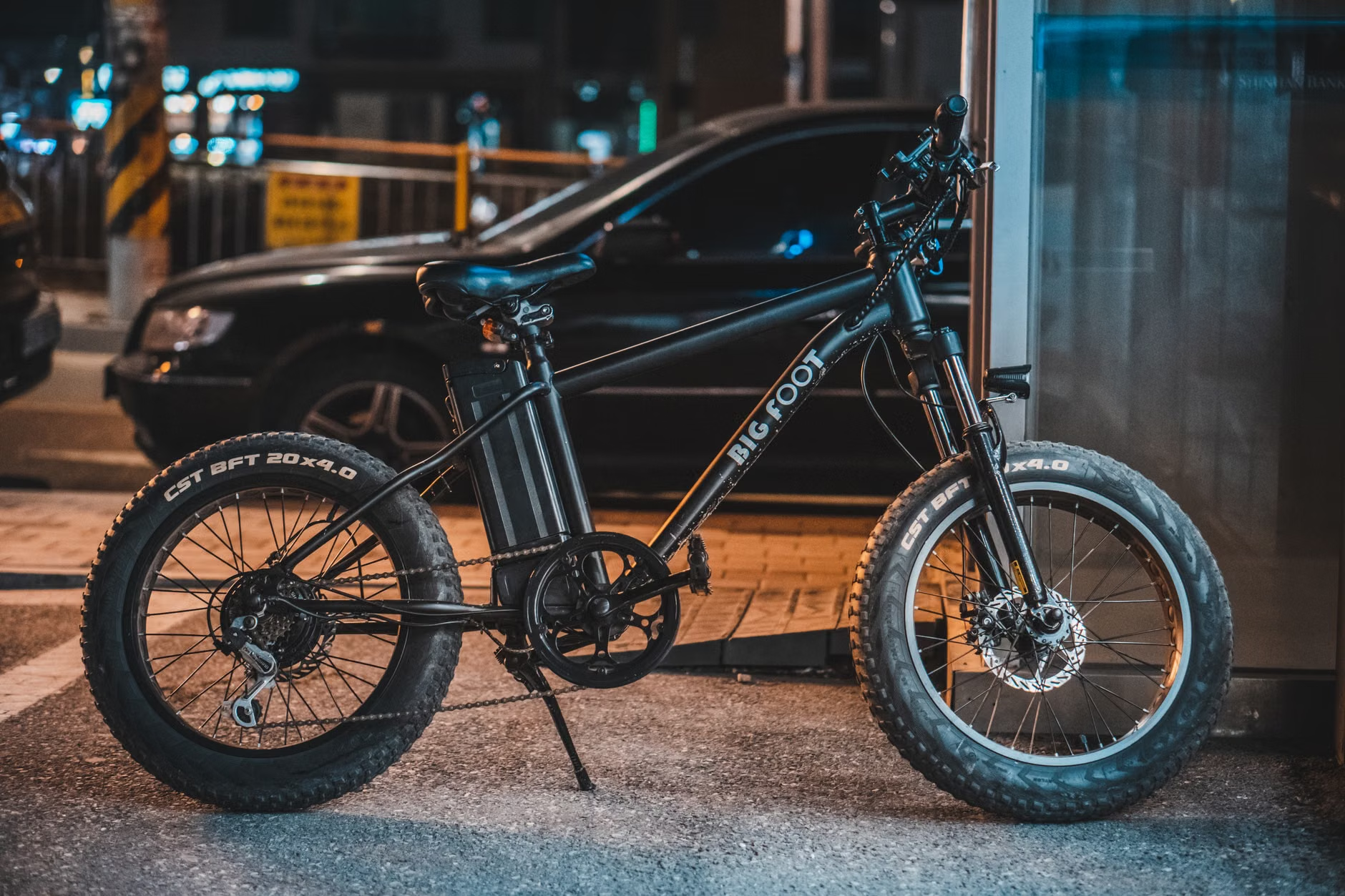
E-bike battery care gets much simpler once two separate goals are clear. Range is how far the next ride goes on the current charge. Lifespan is how much of the battery’s original capacity is still there after months and years of use. Those goals overlap, but they are not identical: a full charge helps today’s ride, while long-term battery health is usually better when the pack spends less time very full, very empty, or very hot. Modern e-bike packs use lithium-ion cells and battery-management electronics, but the chemistry still ages with time, temperature, and use. (osti.gov)
Table of Contents
- TL;DR
- Start by deciding what you are optimizing
- Use the battery stress triangle
- Charge for the ride you actually have planned
- Cold steals range temporarily; heat steals lifespan more quietly
- The easiest ways to stretch range on every ride
- Storage mistakes do more damage than many riders expect
- How to tell normal range variation from real battery decline
- Habits that shorten battery life faster than riders realize
- When replacement is smarter than more babying
- FAQ
- References
TL;DR
- For everyday riding, charge for the ride you actually have planned instead of defaulting to 100% every time. Lithium-ion packs do not need deep discharge, and repeated charging while the battery is still near full can add unnecessary stress. (bosch-ebike.com)
- Heat is the quiet battery killer. Cold usually cuts range temporarily, but high temperatures and long periods parked at a high charge are tougher on long-term health. (nature.com)
- For long storage, keep the battery indoors in a cool, dry place and partially charged. Bosch advises roughly 30% to 60% for long storage, while Shimano says about 70%, which is a useful reminder to check your own system manual. (help.bosch-ebike.com)
- Range on any given day depends on more than battery size. Assist level, cadence, gear choice, tire pressure, cargo, stops, terrain, and temperature all matter. (help.bosch-ebike.com)
- Stop using the battery and get professional help if it swells, leaks, smells unusual, smokes, stays abnormally hot, or refuses to charge normally. (bike.shimano.com)
Start by deciding what you are optimizing
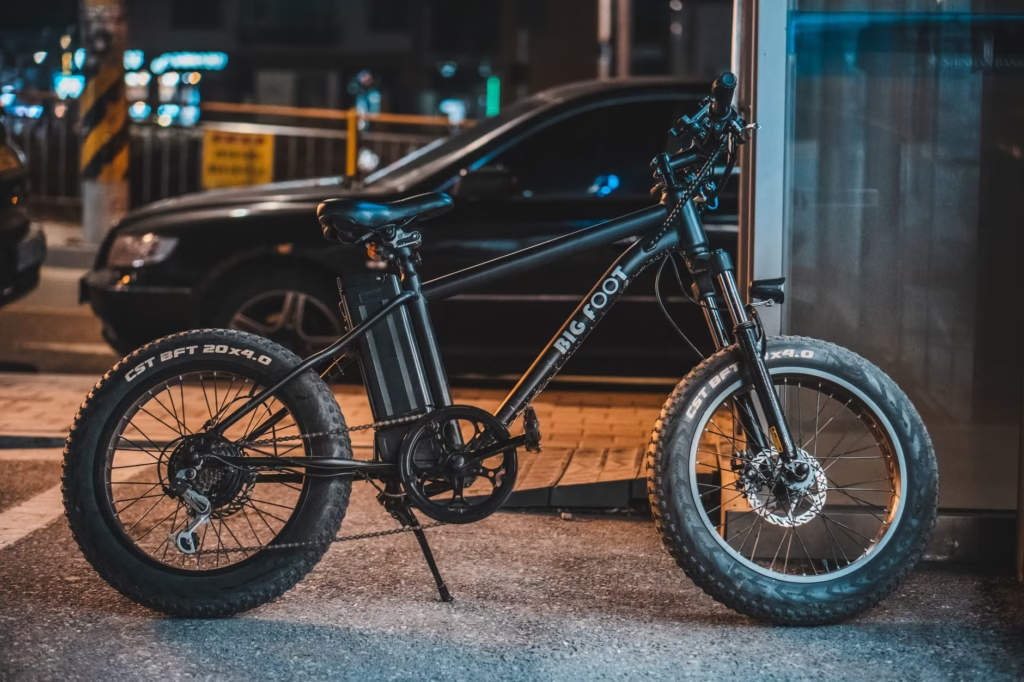
Many riders treat battery care as if there is one perfect routine. There is not. If tomorrow’s ride is long, hilly, windy, or cargo-heavy, filling the battery makes practical sense. If the bike is used for a short weekday commute and then sits for long stretches, keeping it parked at 100% every night is harder to justify. Research on lithium-ion calendar aging points to state of charge and temperature as important drivers of long-term wear, and Shimano’s own guidance warns that repeated charging while the battery is still between 100% and 80% can degrade performance. (osti.gov)
That does not mean riders should become afraid of plugging in. Bosch notes that lithium-ion e-bike batteries do not have a memory effect, so brief top-offs are not inherently harmful and full discharge is not required. The more useful distinction is this: convenient charging is fine, but parking the battery full when it does not need to be full is different from charging it for an imminent ride. (bosch-ebike.com)
Use the battery stress triangle
A useful shorthand is the battery stress triangle: temperature, state of charge, and time. Most avoidable battery wear comes from letting those three factors stack up in the wrong direction. The worst corner of the triangle is a battery that is hot, fully charged, and then left sitting. Another bad corner is a battery left deeply discharged for a long time. (osti.gov)
- Temperature: High heat accelerates aging, while cold usually reduces available performance and range in the moment because internal resistance rises. Bosch and Shimano both note reduced cold-weather range, and Bosch support documents show that very low battery temperature can temporarily limit support until the pack warms up. (nature.com)
- State of charge: Long periods parked full or empty are not ideal. Bosch recommends roughly 30% to 60% for lengthy storage, while Shimano says about 70% for storage and warns against repeatedly charging when the indicator is already between 100% and 80%. (help.bosch-ebike.com)
- Time: Even a lightly used battery ages while sitting. That is why calendar aging matters almost as much as riding cycles for many owners, especially riders who keep a bike for years but do not rack up huge mileage. (osti.gov)
If one idea from this article sticks, make it this one: charge for the next ride, store for the next season. That single rule usually gets riders much closer to the right answer than either always charging to full or trying to baby the pack so much that the bike becomes inconvenient to use. (osti.gov)
Charge for the ride you actually have planned
A rider who uses an e-bike for a modest round-trip commute does not need the same charging routine as someone heading into steep terrain for three hours on Saturday. For the commuter, partial charging often makes more sense. For the long recreational ride, a full charge is sensible because it reduces the odds of ending the ride short on power. Bosch lists headwinds, hills, temperature, cargo weight, cadence, tire pressure, and stop-start riding among the factors that change range, so the right target charge is route-specific, not universal. (help.bosch-ebike.com)
A realistic example helps. Imagine a rider whose weekday use is an easy 18-mile round trip on moderate assist, with plenty left at the end. Charging to full every night mostly creates extra time parked at a high charge. In that situation, a lighter top-up routine is reasonable, with full charges saved for days that include extra errands, stronger headwinds, colder weather, or a much longer weekend ride. That is not a laboratory rule. It is simply the practical consequence of matching battery level to expected demand. (osti.gov)
- After a very hot or very cold ride, let the battery move back toward room temperature before charging. That is a practical inference from manufacturer charging temperature windows and broader evidence on temperature-related battery stress. (bike.shimano.com)
- Use the charger supplied or approved by the bike or drive-system maker. Bosch specifically warns that chargers from other manufacturers can reduce battery service life or cause damage or malfunctions, and USFA guidance for lithium-ion devices also says to use the charger provided by the manufacturer. (help.bosch-ebike.com)
- Charge to the level the next ride needs. Save 100% for genuinely long, demanding, or uncertain rides rather than making it the default for every short hop. (osti.gov)
- If you do charge to full, it is generally better to do it close to the ride than days in advance. That is an evidence-based inference from the way higher state of charge and time together increase calendar-aging stress. (osti.gov)
- Do not intentionally run the battery to empty. Shimano says a completely discharged battery should be recharged as soon as possible, because leaving it fully discharged can advance degradation and eventually make charging or discharging impossible. (bike.shimano.com)
Cold steals range temporarily; heat steals lifespan more quietly
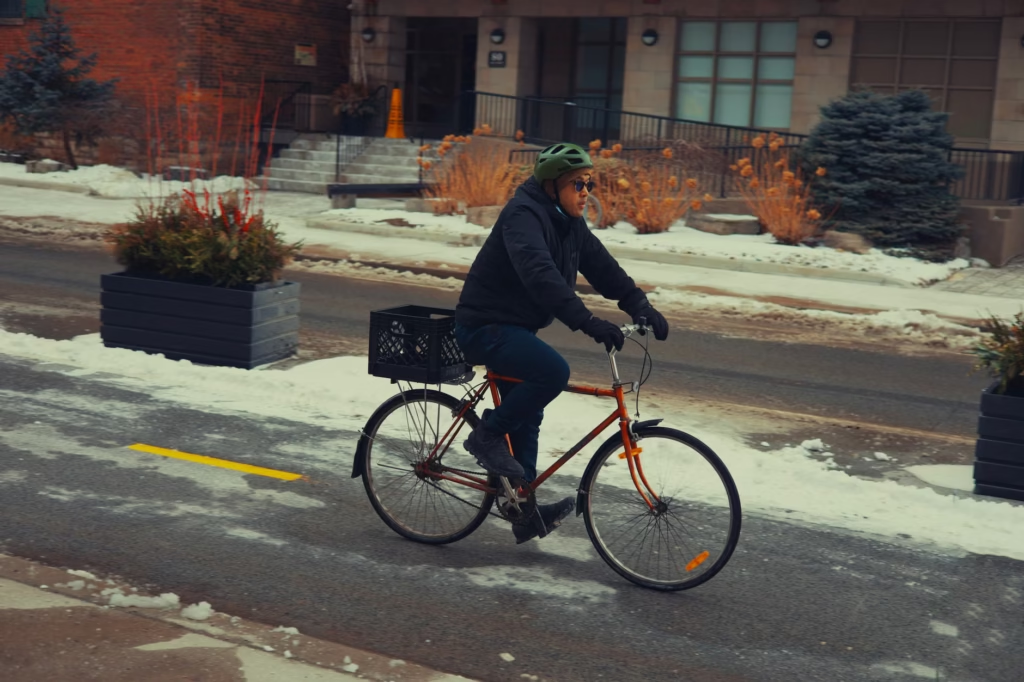
Cold-weather range loss is one of the most misunderstood parts of e-bike ownership. Bosch says battery performance temporarily falls as temperature drops because electrical resistance increases, and Shimano’s winter guidance says the effect is temporary and normal again once the battery is charged at room temperature. In other words, a disappointing January ride does not automatically mean the battery is worn out. (help.bosch-ebike.com)
Winter strategy is simple: keep the battery indoors, charge it indoors, and install it shortly before the ride if the bike has a removable pack. Shimano storage guidance points to roughly 10°C to 20°C, while some current Shimano battery pages list a charging range of 0°C to 40°C. Bosch advises room-temperature charging and storage and suggests charging and storing the battery at room temperature before winter rides. (bike.shimano.com)
Heat matters even more over the long haul. Research on lithium-ion aging shows faster degradation at elevated temperatures, and Bosch’s battery guide says overheating and direct sunlight should be avoided. A battery left inside a hot vehicle, on a rack in full sun, or in a brutally hot shed is under a kind of stress that may not show up immediately but does show up later as lost capacity. (nature.com)
Charging safety deserves its own rule: charge in a dry place, preferably directly from a wall outlet, use the correct charger, and do not charge while sleeping or leave micromobility batteries unattended for long periods if you can avoid it. CPSC’s charging-safety PSA and USFA’s lithium-ion guidance are more about fire prevention than battery longevity, but they belong in any serious battery-care routine. (cpsc.gov)
The easiest ways to stretch range on every ride
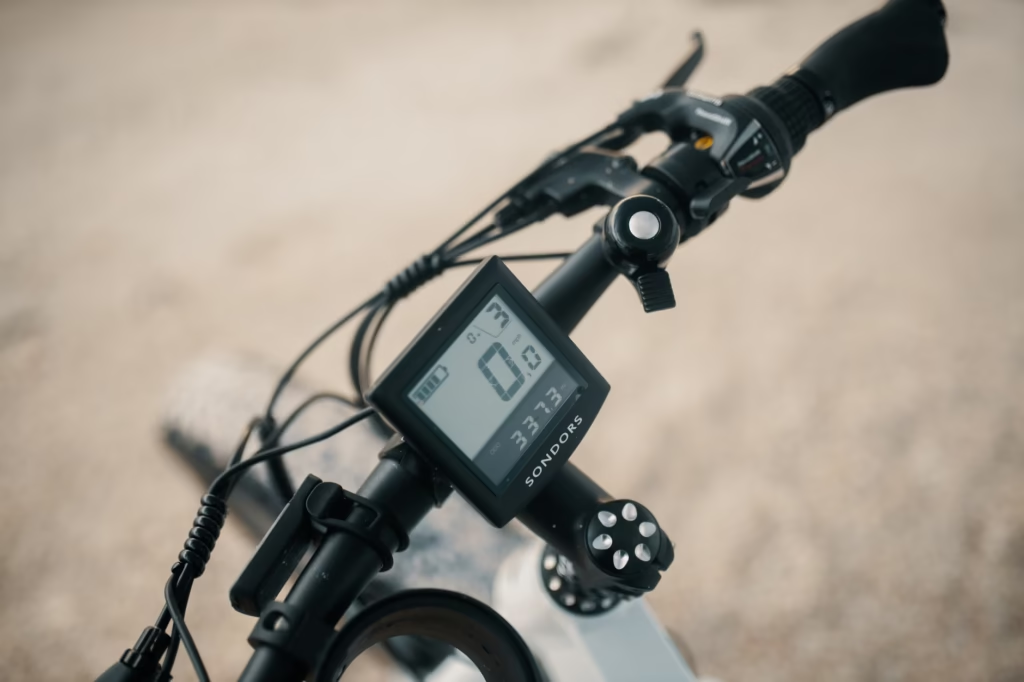
Better battery care is not only about charging. It is also about using the energy you already have more efficiently. Bosch says range is affected by cadence, gear shifting, starts and braking, tire pressure, temperature, and total weight. Shimano similarly points to terrain, battery capacity, and assist settings, and notes that reduced assist can increase distance per charge. (help.bosch-ebike.com)
| Habit or adjustment | Effect on this ride’s range | Long-term implication | Better default |
|---|---|---|---|
| Nightly 100% charging for a short, predictable commute | Maximum buffer every morning | More time sitting at high charge than many riders need | Charge for the ride; reserve full charges for longer or less predictable days. (osti.gov) |
| Using the highest assist mode everywhere | Strongest support, but fastest battery draw | More frequent charging over time because each ride uses more energy | Use the lowest assist that still feels natural for the route. (bike.shimano.com) |
| Grinding a hard gear at low cadence | Usually less efficient on climbs and starts | No direct damage by itself, but it can waste range | Shift earlier and aim for a smoother cadence; Bosch cites 60 to 90 rpm as ideal. (help.bosch-ebike.com) |
| Very low tire pressure on pavement | More rolling resistance and shorter range | No battery damage, but range suffers | Keep tires appropriately inflated for the surface and within the tire’s safe limits. (help.bosch-ebike.com) |
| Leaving unnecessary cargo on the bike | Shorter range, especially on hills and stop-start routes | No direct chemical harm, but more energy use per mile | Carry what the ride requires and remove dead weight when possible. (help.bosch-ebike.com) |
| Pressure-washing the battery area or connectors | No benefit | Added risk to seals, ports, and electronics | Use low-pressure cleaning and keep water away from sensitive connection points. (bosch-ebike.com) |
Two adjustments usually pay off fastest: assist discipline and gearing. Riders often search for magic battery settings when the simpler fix is to drop one assist mode on flatter sections and shift sooner on climbs so the motor is not being asked for maximum support at every low-cadence surge. Bosch’s range guidance is especially clear that smoother speed, correct shifting, and steady cadence all improve efficiency. (help.bosch-ebike.com)
There is one important tradeoff here. The settings that maximize range on paper are not always the settings that maximize control, traction, or comfort. Bosch says maximum permissible tire pressure helps range, but that does not automatically make it the right choice for every tire, rider weight, or rough surface. A range-first setup still has to be rideable and safe. (help.bosch-ebike.com)
Storage mistakes do more damage than many riders expect
If the bike will sit for weeks, storage habits matter more than day-to-day charging rituals. Bosch recommends about 30% to 60% for longer storage, while Shimano says about 70%. Those numbers are not contradictory enough to cause panic. They simply show that the right storage target is partial charge, not empty and not full, and that the final call should come from the battery maker’s own manual. Both brands also say the battery should be kept in a cool, dry indoor place away from direct sun. (help.bosch-ebike.com)
- Remove the battery from the bike if practical and store it indoors in a cool, dry place. (bike.shimano.com)
- Do not leave it fully discharged through the off-season. Shimano specifically warns that a fully discharged battery left that way may degrade to the point that charging or discharging becomes impossible. (bike.shimano.com)
- Do not leave it parked for months near combustible materials. Bosch’s storage guidance says not to store the battery near combustible or flammable materials and recommends a room with a smoke detector. (help.bosch-ebike.com)
- Set a reminder to check charge during long storage. Shimano says the battery must be charged regularly during long-term storage, even though the exact interval depends on model and conditions. (bike.shimano.com)
That last point is easy to ignore and often expensive. A battery that is mildly neglected during riding can still be fine. A battery that disappears into a garage corner for months at the wrong charge level is far more likely to age badly. Storage is where many otherwise healthy packs lose ground. (osti.gov)
How to tell normal range variation from real battery decline
One weak ride is not proof that the battery is worn out. Temperature, route profile, cargo, tire pressure, and assist mode can shift range enough to create false alarms. Before blaming the battery, compare like with like. If today was colder, hillier, windier, or heavier than usual, the result may be normal. (help.bosch-ebike.com)
- Pick a familiar route and repeat it under roughly similar conditions if possible: same assist mode, similar temperature band, similar cargo, and similar tire pressure. (help.bosch-ebike.com)
- Charge the battery in your normal way and note the starting level. (bosch-ebike.com)
- Ride the same route several times rather than judging from one outing. Consistency matters more than a single result. This is an editorial diagnostic method, not a manufacturer protocol. (help.bosch-ebike.com)
- If the battery now delivers clearly less distance or uses markedly more charge on the same route, book a dealer check. Bosch dealers can measure current energy content with a CapacityTester, and Shimano dealer tools can check battery and error information through E-TUBE PROJECT Professional. (help.bosch-ebike.com)
Also watch for symptoms that are not just about shorter range: abnormal heat after charging, swelling or deformation, leakage, unusual odor, smoke, repeated charging failures, or unexplained shutoffs. Shimano’s support materials treat those as stop-using-the-battery issues, not mild inconveniences. If the battery is physically damaged or behaving strangely, the right next step is professional service, not more home troubleshooting. (bike.shimano.com)
Habits that shorten battery life faster than riders realize
- Leaving the battery in a hot car, in direct summer sun, or in an overheated outbuilding. (nature.com)
- Storing it empty, especially through winter or other long inactive periods. (bike.shimano.com)
- Using the wrong charger or a questionable aftermarket replacement instead of a system-approved one. (help.bosch-ebike.com)
- Trying to fix or rebuild the battery pack yourself. USFA says repairs to lithium-ion battery packs should only be performed by a certified repair facility. (usfa.fema.gov)
- Pressure-washing around the battery, charge port, seals, or system electronics. Bosch forbids high-pressure washing, and Specialized has documented a recall scenario where repeated pressure-washing contributed to water ingress risk on certain packs. (bosch-ebike.com)
- Ignoring a pattern of unusual heat, swelling, smell, or charging problems because the bike still technically turns on. (bike.shimano.com)
When replacement is smarter than more babying
Every battery has a finite service life. If range has fallen meaningfully on repeated same-route checks, if the pack no longer charges properly, or if a dealer test shows significantly reduced remaining energy, replacement may be the more rational move. Shimano says expected service life is tied to model and conditions, but also uses a reference point of 60% of original capacity after 1,000 or fewer charges for some of its e-bike guidance. That is best read as a rough benchmark, not a promise that every battery will age the same way. (bike.shimano.com)
Replacement is also the point where compatibility and safety matter most. Shimano’s support pages note that battery, battery-holder, and drive-unit compatibility need to be checked, and Bosch warns against using unapproved chargers. The safest general rule is to buy the correct OEM or explicitly approved replacement through a reputable dealer, and to check CPSC recall information and certification marks when shopping for batteries or chargers. (bike.shimano.com)
Good e-bike battery care is not obsessive. It is selective. Keep the battery out of heat, avoid letting it sit empty, do not default to 100% unless the ride calls for it, store it partially charged when it will be idle for a while, and pay attention to changes that persist across comparable rides. Those habits will usually do more for both range and lifespan than any gadget or miracle tip. (osti.gov)
FAQ
Should I fully drain my e-bike battery before charging it again?
No. Bosch says lithium-ion e-bike batteries do not have a memory effect, so complete discharge is not required, and Shimano warns that leaving a fully discharged battery sitting can advance degradation. Partial charging is normal. (bosch-ebike.com)
Why does my e-bike get less range in winter?
Cold weather temporarily reduces battery performance because internal resistance rises. Bosch and Shimano both say range drops in the cold, and Shimano notes that this effect is temporary and returns to normal once the battery is charged at room temperature. (help.bosch-ebike.com)
Can I use a different charger if it fits the port?
That is not a good assumption. Bosch says chargers from other manufacturers can reduce battery service life or cause damage or malfunctions, and USFA guidance says to use the charger provided by the manufacturer for the device being charged. (help.bosch-ebike.com)
How do I know when the battery needs professional inspection?
A persistent same-route range drop is one sign, but physical and charging symptoms matter more: unusual heat, swelling, leakage, odor, smoke, or repeated failure to charge. Bosch dealers can measure current energy content with a CapacityTester, and Shimano dealer tools can check battery and error information. (help.bosch-ebike.com)
What should I do with a dead or damaged e-bike battery?
Do not throw it in the trash. Bosch says old or defective e-bike batteries can be handed in at a bicycle retailer for recycling, and damaged batteries should be handled carefully with taped contacts and kept in a safe place outdoors until proper disposal. Shipping lithium batteries is regulated by the U.S. Department of Transportation, so ask the carrier and follow the applicable rules if transport is required. (help.bosch-ebike.com)
References
- Bosch eBike Systems: Rechargeable Battery Guide 2019 – https://www.bosch-ebike.com/fileadmin/EBC/Service/Downloads/Broschueren/Bosch-eBike-Battery-Guide_MY2019_NZ.pdf?_=1539091780
- Bosch eBike Systems Help Center: How can I prepare my Bosch eBike battery for optimal winter storage? – https://help.bosch-ebike.com/us/help-center/asset-asf-01034
- Bosch eBike Systems Help Center: What range can I achieve with the Bosch eBike system? – https://help.bosch-ebike.com/au/help-center/ebw-chargersbes2/asset-asf-00311
- Bosch eBike Connect Help Center: How can I determine the current capacity of my Bosch eBike battery? – https://help.bosch-ebike.com/cy-en/connect/help-center/ebc-dualbattrybes2-care/asset-asf-01033
- Bosch eBike Systems Help Center: Can chargers from other manufacturers be used safely? – https://help.bosch-ebike.com/us/help-center/ebw-chargersbes3/asset-asf-00543
- Shimano E-Bike Systems FAQ – https://bike.shimano.com/en-AU/support-and-service/faq/STP0A.html
- Shimano product page: BT-EN817-B 712Wh integrated battery – https://bike.shimano.com/en-NA/products/components/pdp.P-BT-EN817-B.html
- Shimano Lifestyle: Looking after your e-bike battery in winter – https://lifestylebike.shimano.com/us/stories/looking-after-your-e-bike-battery-in-winter
- U.S. Consumer Product Safety Commission: Micromobility Battery Charging Safety PSA – https://www.cpsc.gov/node/65775
- U.S. Fire Administration: Lithium-Ion Battery Safety for Electronic Devices – https://www.usfa.fema.gov/downloads/pdf/publications/lithium-ion-battery-safety-handout.pdf
- U.S. Department of Transportation: Are Lithium Batteries in your package? – https://www.transportation.gov/check-box/are-lithium-batteries-your-package
- OSTI / Joule: A decade of insights: Delving into calendar aging trends and implications – https://www.osti.gov/pages/biblio/2536694
