
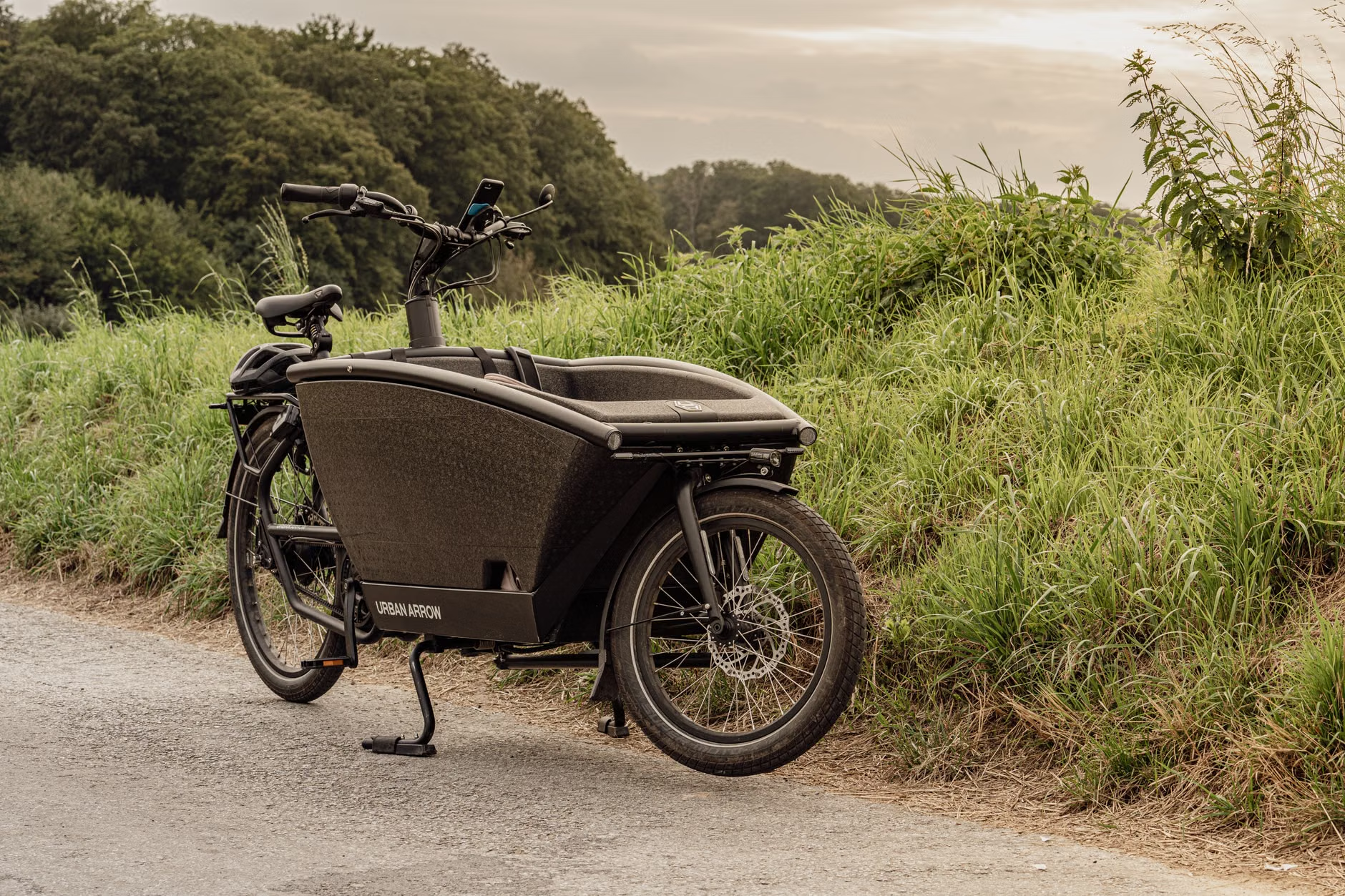
For some households, yes. But a cargo bike is usually a better replacement for a second car, or for a large share of local driving, than for every trip a car handles. It works best when the hard part of daily life is not distance so much as hauling: two kids to school, a grocery run, a work bag plus gym clothes, or a pet and a pile of errands. Add electric assist, and those trips stop feeling like athletic events.
What a cargo bike replaces well, and what it does not
What makes a cargo bike different from a standard bike is not speed. It is stability and carrying capacity. Longtail models stretch the rear of the bike to hold child seats or big panniers. Front-loader models put the cargo box between the handlebars and the front wheel, which is especially useful when the load is children, awkward grocery bags, or anything you want to keep in sight. If the trip is short, low-speed, and repetitive, a cargo bike can feel more like a utility vehicle than a hobby bike.
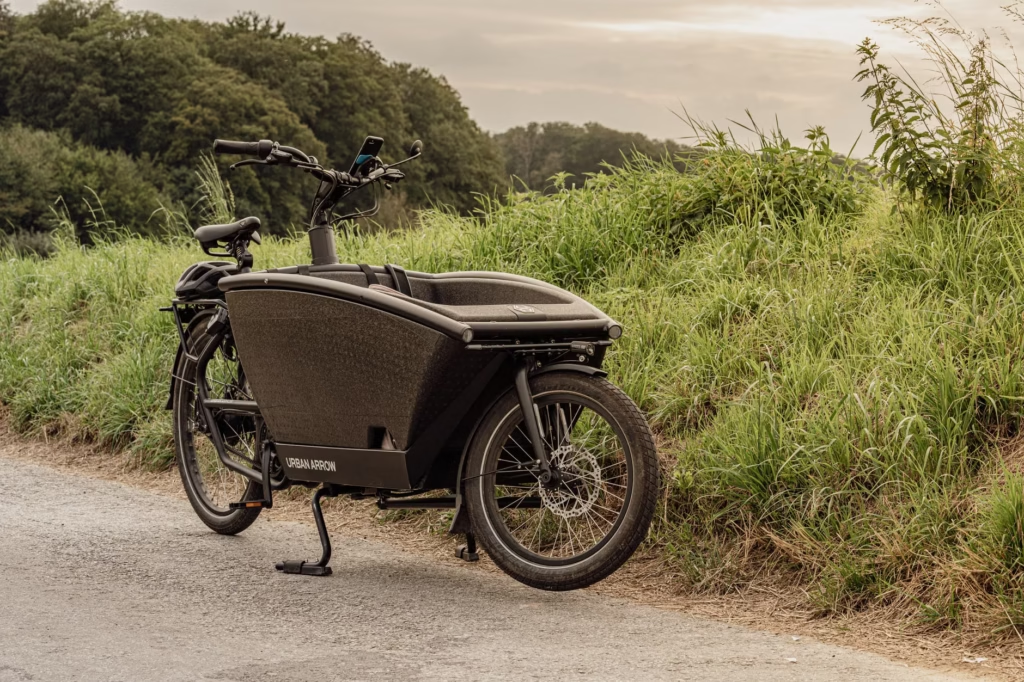
What it does not replace well is just as important. A cargo bike is a weak substitute for highway travel, far-flung suburbs, unpredictable all-day errands, or trips where secure parking is scarce at both ends. It also asks more of the street network. A four-mile ride on calm neighborhood streets can be easy. A two-mile ride with fast turns, no bike lane, and stressful pickup traffic can feel impossible. The practical question is not whether a cargo bike can carry the load. It is whether the route, the timing, and the routine are good enough for the bike to become normal.
Use your last two weeks of trips as the real test
The quickest way to judge practicality is to review the last two weeks of car trips, not your most heroic imagined future. The FHWA’s 2022 National Household Travel Survey found average shopping trips of 5.8 miles and other family or personal-errand trips of 8.7 miles, while average commute trips were longer at 13.5 miles. That helps explain why cargo bikes often replace errands first and commuting second. Distance matters, but trip purpose matters just as much. (fhwa.dot.gov)
- List every recent car trip that was local and repeatable.
- Circle the trips that involved carrying kids, groceries, backpacks, or other cargo but did not require highway speeds.
- Mark the trips that have a route you would actually ride on a busy weekday, not just on a quiet weekend.
- Check both ends of the trip for secure parking, weather shelter, and, if the bike is electric, a sensible charging routine.
- If a cargo bike could absorb several recurring trips each week, it is probably practical. If it only replaces one occasional run, it may be an expensive answer to a small problem.
This exercise usually reveals the real limiter. Sometimes it is distance. Just as often it is storage, route quality, or timing around school drop-off. That is why cargo bikes tend to work best in compact neighborhoods where parking is annoying, traffic is slow, and the rider has at least one calm or protected route available.
The real tradeoffs show up in storage, weather, and safety
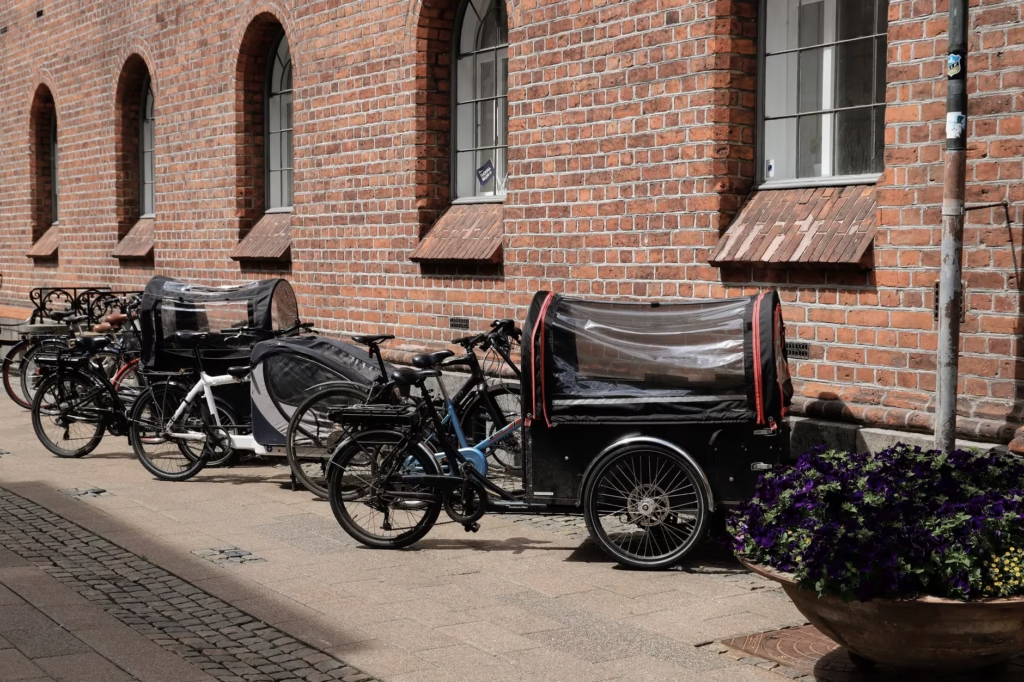
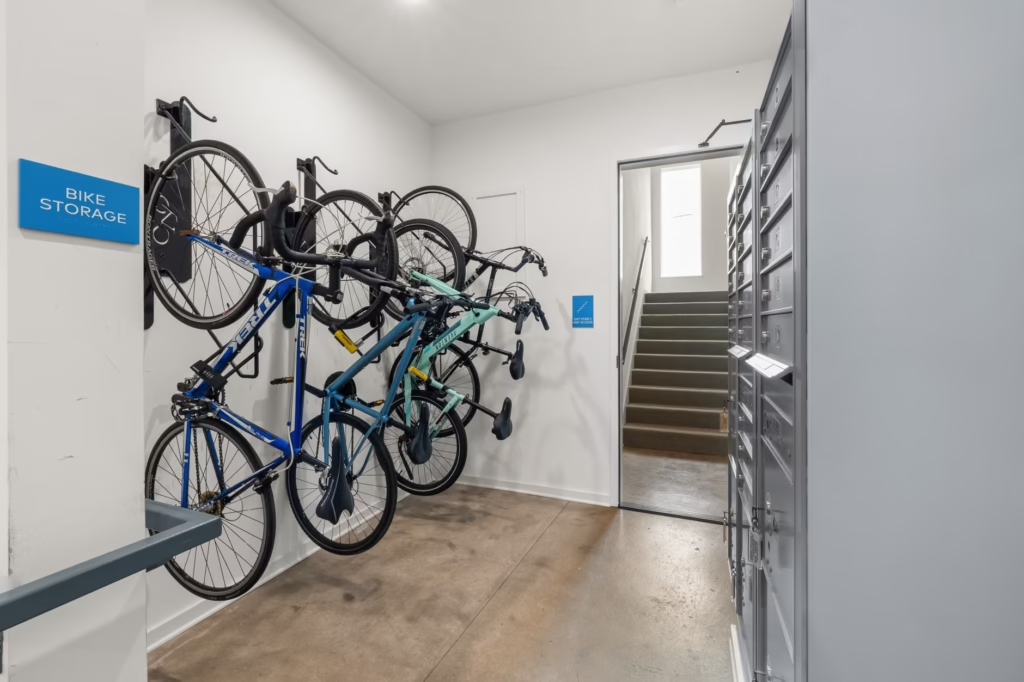
The hidden friction is physical rather than ideological. Cargo bikes take room. They need a realistic place to park, and an electric model needs a safe, convenient place to charge. Loading children, buckling helmets, locking the bike, and covering gear in the rain can add a few minutes to every trip. On the other hand, they can also eliminate parking searches, engine warm-up, and the inefficiency of using a full-size car to move one adult and two grocery bags.
If the bike will carry children or heavy loads, follow the maker’s passenger and cargo limits exactly. The CPSC also advises riders to follow local traffic laws, wear a bicycle helmet, use only the charger supplied or recommended by the manufacturer, and stay present while charging. Requirements for helmet use, riding locations, and roadway use vary by community. (cpsc.gov)
That last point matters because an electric cargo bike is not just a bicycle with a basket. It is a micromobility device with a battery, electronics, and model-specific limits. The CPSC advises against modified battery packs, repurposed cells, and charging setups that are not approved for the device, because those choices can create fire risk. A cheap replacement battery is not a bargain if it complicates where and how the bike can safely live. (cpsc.gov)
For many households, the smartest target is the second car
For many U.S. households, the smartest goal is not a total break with cars. It is to turn the car into the exception. A cargo bike is a strong candidate when most weekly trips are short, urban, and predictable: daycare, school, groceries, pharmacy, transit station, playground, coffee shop, or a short commute. It is a weaker fit when the week revolves around long suburban distances, fast arterials, steep hills without electric assist, or places where theft and storage are still unresolved.
The U.S. Department of Energy’s Alternative Fuels Data Center notes that active transportation directly replaces motor-vehicle miles traveled and that e-bikes can serve as an alternative to car use. In practice, that makes cargo bikes most convincing inside a mixed transportation setup: bike for neighborhood trips, transit for some longer commutes, and car share, rental, or one remaining household car for the awkward trips that a bike will never handle well. (afdc.energy.gov)
A cargo bike does not have to replace every mile of car travel to be a practical alternative to a car. If it reliably takes over the short, frequent trips that make up the messiest part of local life, it is already doing real utility work. That is the standard worth using.
References
- Federal Highway Administration – Summary of Travel Trends: 2022 National Household Travel Survey – https://www.fhwa.dot.gov/policyinformation/2022Summary_of_Travel_Trends_Report.pdf
- U.S. Department of Energy Alternative Fuels Data Center – Active Transportation and Micromobility – https://afdc.energy.gov/conserve/active-transportation
- U.S. Consumer Product Safety Commission – Micromobility: E-Bikes, E-Scooters and Hoverboards – https://www.cpsc.gov/Safety-Education/Safety-Education-Centers/Micromobility-Information-Center
- U.S. Consumer Product Safety Commission – Micromobility Battery Charging Safety – https://www.cpsc.gov/node/65775
