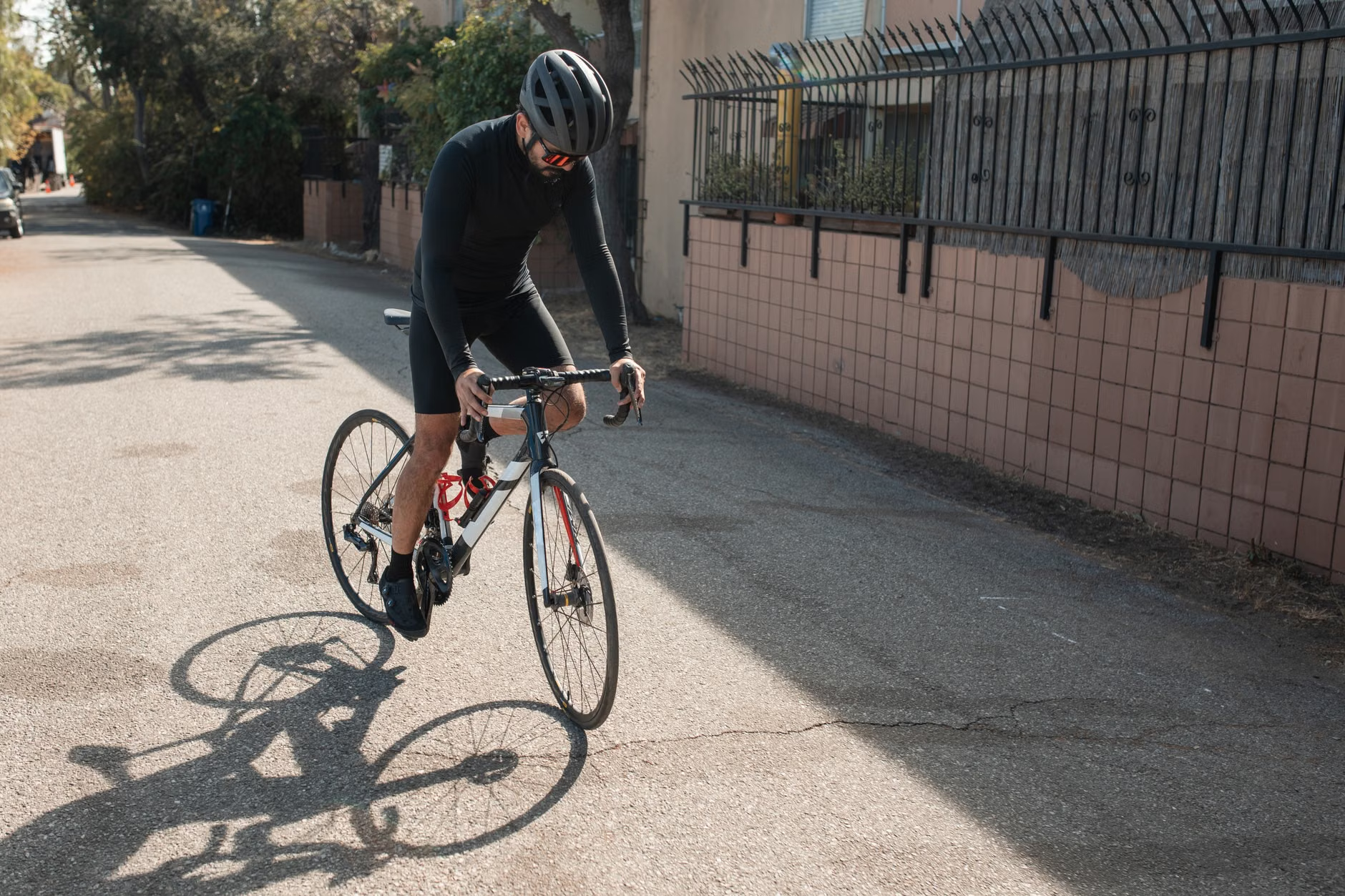
Most beginner cycling mistakes are not dramatic. They are the smaller decisions that stack up until a ride feels unstable, stressful, or exhausting: a bike that does not quite fit, a route that is too chaotic for your current skills, braking that is too abrupt, or an effort level that turns practice into punishment. NHTSA notes that falls are common, while crashes involving motor vehicles are the most serious, which is why the best early habits are usually the least glamorous ones: fit, predictability, visibility, and restraint. (nhtsa.gov)
TL;DR
- A beginner’s first goal should be control, not speed, distance, or an aggressive bike position. (nhtsa.gov)
- Bad fit, a poorly worn helmet, and skipped pre-ride checks can make ordinary rides feel much worse and raise risk quickly. (cdc.gov)
- Low-stress routes, predictable road behavior, and better visibility reduce conflict with drivers and lower mental load. (nhtsa.gov)
- Smooth braking and easier, earlier shifting matter more for beginners than raw leg strength. (media.trekbikes.com)
- Consistent, mostly manageable rides build fitness and confidence better than occasional all-out sufferfests. (usacycling.org)
Use the control-first progression before you chase speed or distance
Before making rides longer, faster, hillier, or more traffic-heavy, use a control-first progression. Increase only one form of difficulty at a time, and only after the current level feels controlled, comfortable, and repeatable. That approach lines up with formal guidance: NHTSA advises riders to start in a safe environment away from traffic, while manufacturer manuals treat correct fit and pre-ride inspection as prerequisites rather than advanced extras. As a simple example, if a new rider is happy on a greenway but still swerves during shoulder checks, the next step is not a fast group ride. It is another week of quiet-neighborhood practice with starts, stops, signaling, and braking. (nhtsa.gov)
- Control: Can you start, stop, signal, shoulder check, shift, and brake without wobbling or panicking? If not, add practice before adding speed or traffic. (nhtsa.gov)
- Comfort: After 30 to 45 minutes, do you feel merely worked, or are you fighting knee pain, hand numbness, saddle pressure, or neck strain? Persistent discomfort is usually a setup signal, not a toughness test. (static.giant-bicycles.com)
- Consistency: Can you finish a modest ride and feel able to repeat it in a day or two? USA Cycling’s beginner guidance puts more value on steady, repeatable training than on occasional heroic rides. (usacycling.org)
1-3: Setup mistakes that make a normal ride feel awkward
1. Riding a bike that does not really fit
Fit is not only a performance issue. Giant’s owner guidance says correct fit is essential for safety, performance, and comfort, and a bike that is too large or too small can lead to loss of control. For a beginner, the practical warning signs are easy to spot: you cannot stand over the bike comfortably, your hips rock at the bottom of the pedal stroke, you feel too stretched to reach the bars, or you have dropped the saddle so low that pedaling feels choppy and weak. (static.giant-bicycles.com)
Do not copy an aggressive race-bike position from social media. A slightly more upright setup often makes more sense early on because it improves balance, breathing, and confidence. Ask the shop that sold the bike for a basic fit check of saddle height, reach, and control position, then change only one thing at a time. If the saddle causes pain, numbness, or other discomfort, Giant advises stopping until the fit or saddle choice is corrected. Manufacturer manuals also warn that some adjustments require correct torque and should be checked by a qualified dealer or mechanic. (static.giant-bicycles.com)
2. Treating the helmet as optional or wearing it badly
CDC recommends properly fitted bicycle helmets for riders of all ages, and NHTSA stresses that fit matters, not just ownership. A classic beginner mistake is buying any helmet that looks right, wearing it tipped back, or leaving the straps loose because a snug fit feels unfamiliar. That undermines the protection the helmet is meant to provide. (cdc.gov)
Look for a bicycle helmet that complies with the U.S. CPSC standard. On your head, it should sit level and low on the forehead, with the front edge about two finger-widths above the eyebrows, the side straps forming a V around the ears, and the chin strap snug enough for roughly two fingers underneath. If the helmet slides when you shake your head, it is not fitted yet. (nhtsa.gov)
3. Rolling out without a pre-ride check
New riders often assume mechanical problems announce themselves dramatically. More often they show up as preventable nuisances: soft tires, a brake lever that pulls too far, a loose wheel, or a saddle that has drifted slightly out of position. The League of American Bicyclists’ ABC Quick Check and Trek’s pre-ride checklist cover the same core items: air, brakes, chain and cranks, wheel attachment or quick releases, straight-spinning wheels, and a quick functional check before you head into traffic. (bikeleague.org)
This habit matters because a minor issue is easiest to solve before the ride begins. If anything feels wrong, fix it or have the bike serviced first. Trek’s manual is explicit: if a part does not pass the safety check, do not ride until it is corrected. (media.trekbikes.com)
4-6: Traffic mistakes that raise stress and risk quickly
4. Picking routes that exceed your skill level
A common beginner error is confusing ambition with progress. NHTSA recommends learning in a safe environment away from traffic before taking those skills onto the road. In practice, that usually means starting on quiet neighborhood streets, low-stress greenways, empty parking lots, or short loops that make it easy to stop, regroup, or head home if needed. (nhtsa.gov)
Busy multilane roads, fast descents, complex intersections, and brisk group rides can wait. A route is too advanced if every intersection makes you tense, you are braking hard at small surprises, or you spend the whole ride reacting instead of observing. Confidence usually grows faster when the environment gets simpler, not when the rider tries to endure unnecessary chaos. (nhtsa.gov)

5. Riding unpredictably
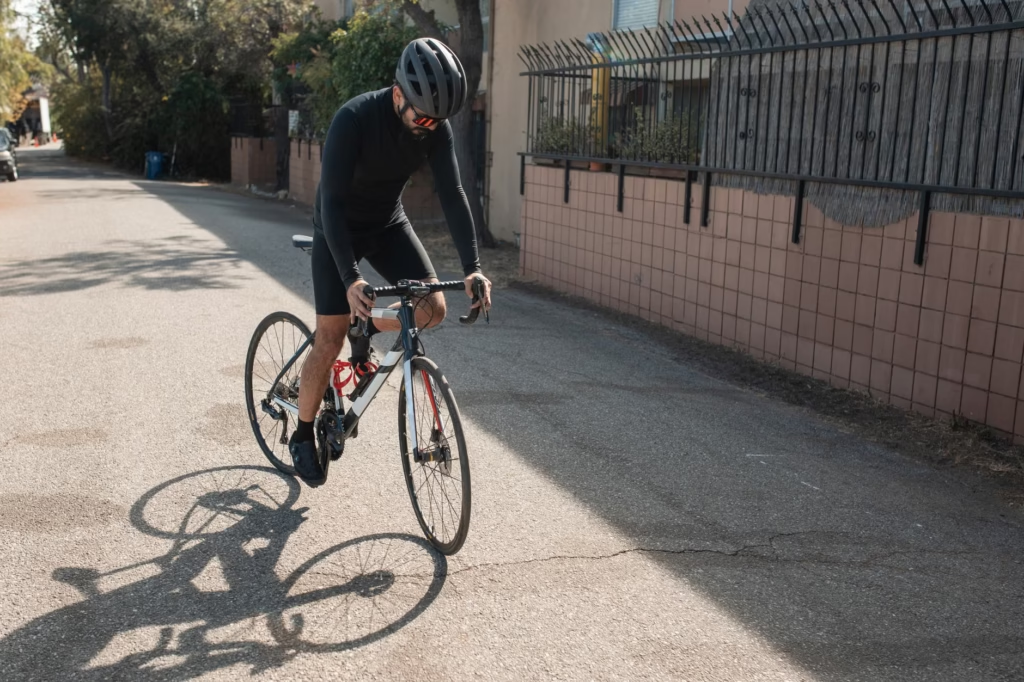
Beginners often drift in and out of parked-car gaps, ride far to the edge until they need to swerve around debris, or make late turns with almost no warning. That can feel cautious from the saddle, but it is confusing to everyone else. NHTSA’s guidance is straightforward: ride with the flow of traffic, obey signs and signals, signal and look over your shoulder before changing lane position or turning, and ride where others expect to see you. NHTSA also advises avoiding or minimizing sidewalk riding because drivers often do not look for fast-moving bicycle traffic at driveways and turns. (nhtsa.gov)
Traffic laws and equipment rules vary by state and city. Sidewalk riding, night-riding requirements, and hand-signal expectations are not identical everywhere, so check local rules before assuming what is legal in one place is legal in another. (nhtsa.gov)
6. Assuming people can see you
Poor visibility is not only a nighttime problem. The beginner version is dressing in low-contrast clothing at dusk, assuming reflectors are enough, or tucking so far to the edge that parked cars, mirrors, and turning vehicles block sight lines. NHTSA recommends bright daytime clothing, reflective gear in low light, and a white front light plus a red rear light and reflectors at night or in poor visibility. Trek’s current owner’s manual goes further and recommends front and rear lights day and night to stand out to motorists. (nhtsa.gov)
Lights are not a force field. They help other people detect you sooner, but the better habit is combining lighting with stable lane position, earlier signaling, and the assumption that a driver may still miss you. (nhtsa.gov)
7-9: Technique habits that quietly undermine control
7. Staring at the front wheel
New riders often look only a few feet ahead because the bike feels wobbly. Unfortunately, that usually makes steering twitchier and shortens reaction time. NHTSA urges cyclists to look ahead for hazards such as potholes, grates, train tracks, pebbles, and turning vehicles. Keep your head up and scan farther down the road or trail than feels natural at first. The bike often tracks straighter when your eyes do. (nhtsa.gov)
8. Braking like an on-off switch
Braking is one of the easiest places to lose confidence. Some beginners overuse the rear brake because the front brake feels scary. Others grab a handful of front brake in a panic. Trek’s manual explains the tradeoff clearly: the front brake provides more stopping power, but sudden or excessive front-brake force can lift the rear wheel or make the front slide. The better habit is to use both brakes smoothly and progressively, adding pressure instead of stabbing at the levers. (media.trekbikes.com)
Practice in an empty lot until stopping hard feels boring. Start at moderate speed, keep the bike upright, shift some body weight rearward when braking harder, and learn when your tires begin to complain. On wet, dirty, or uneven pavement, Trek advises allowing more time and distance because braking response changes. (media.trekbikes.com)
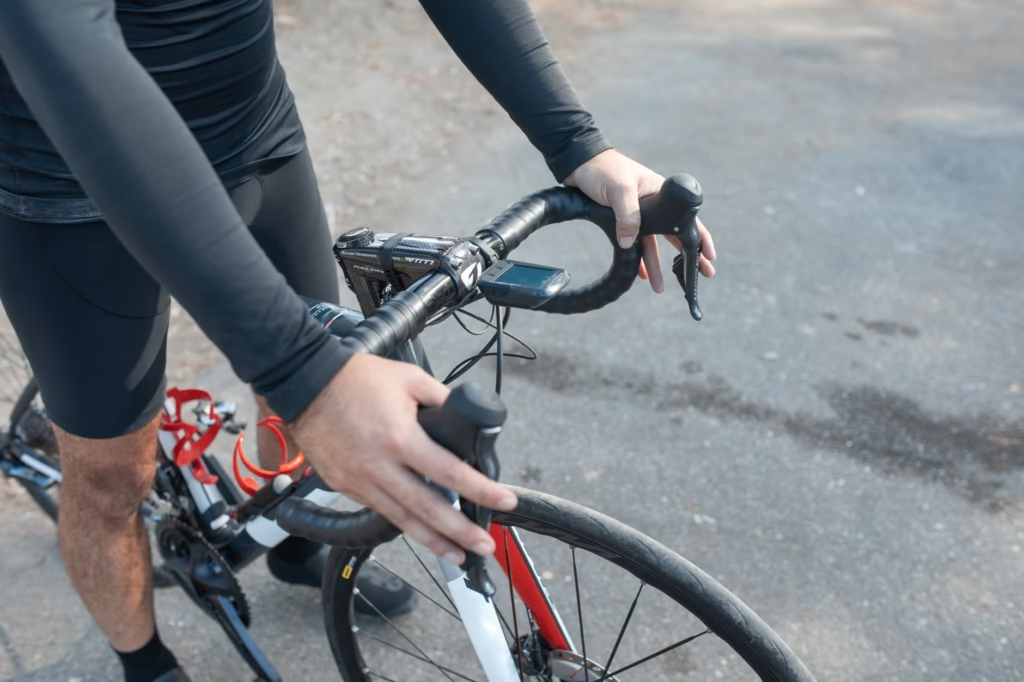
9. Grinding hard gears and shifting under full pressure
Another beginner habit is staying in gears that are too hard and then trying to force a shift while stomping on the pedals. Trek advises riders to choose a gear that lets them pedal at a comfortable, constant rate, to shift only while the chain is moving forward, and to reduce pedal force during the shift so the drivetrain can move smoothly and wear less quickly. (media.trekbikes.com)
If climbs make you grind slowly, your knees feel loaded, or the chain clunks every time the road tilts up, shift earlier. The goal is not to prove strength. It is to keep momentum with a smoother cadence, protect the drivetrain, and save your legs for the second half of the ride. (media.trekbikes.com)
10. Pushing distance and discomfort past the point of learning
10. Trying to improve by suffering through every ride
Many beginners think progress means finishing every ride completely spent. USA Cycling’s beginner guidance argues almost the opposite: consistency matters more than random hard rides, and riding too hard too often is a common novice mistake. For most new riders, several manageable rides each week build more fitness and confidence than one punishing weekend epic. As rides get longer, carry water and, eventually, enough food and a basic repair kit so a flat or unexpected delay does not become a crisis. (usacycling.org)
There is a difference between adaptation and warning signs. Mild saddle acclimation or tired legs can be normal early on. Sharp knee pain, persistent hand numbness, worsening neck pain, or saddle numbness are not badges of progress. Giant’s guidance says that if your saddle setup causes pain, numbness, or other discomfort, stop riding until the fit or saddle is corrected. (static.giant-bicycles.com)
| What you notice | Likely beginner mistake | First thing to change |
|---|---|---|
| Your hips rock or your knees feel cramped | Bike fit or saddle height is off | Adjust saddle height in small steps and get a shop fit check if the problem continues. (static.giant-bicycles.com) |
| You panic at every stop sign or busy crossing | Your route is ahead of your current skill level | Move to a quieter loop and practice repeated starts, stops, and shoulder checks before adding traffic. (nhtsa.gov) |
| Drivers seem surprised by you | You are not visible or predictable enough | Use lights, ride a steadier line, and signal earlier instead of weaving late around obstacles. (nhtsa.gov) |
| Hard stops feel sketchy | Braking technique is abrupt or one-sided | Practice smooth two-brake stops in an empty lot and learn the feel of increasing pressure gradually. (media.trekbikes.com) |
| Every ride turns into a death march after 30 to 45 minutes | Your effort is too hard or your ride plan is unrealistic | Shorten the route, ride easier, bring water, and focus on repeatable sessions rather than heroic ones. (usacycling.org) |
A five-minute reset before your next ride
- Helmet and visibility first: put on a properly fitted helmet, then check that your front and rear lights work if you use them. (nhtsa.gov)
- Run an ABC check: air, brakes, chain and cranks, and wheel attachment or quick releases. (bikeleague.org)
- Do a 20-second fit check: when you settle onto the bike, do you feel balanced and able to reach the controls without locking your elbows or crowding your knees? (static.giant-bicycles.com)
- Pick the route that matches today’s skill and energy level, not the route that flatters your ego. If traffic or wind feels like too much, scale the ride back. (nhtsa.gov)
- Set an effort plan before the wheels roll: today is either an easy practice ride, a moderate endurance ride, or a short skill session. Bring water, and for longer rides bring food and a simple repair kit. (usacycling.org)
That reset is intentionally simple. The point is not to turn cycling into a preflight ritual. It is to remove the most common reasons a beginner ride goes wrong before momentum and pride make those problems harder to solve. (media.trekbikes.com)
Conclusion
Beginners usually do not struggle with cycling because they lack grit. They struggle because early mistakes make the bike feel less stable, traffic feel less predictable, and every ride cost more energy than it should. Start with control, keep the setup simple and correct, choose routes that let your skills catch up, and let consistency do the heavy lifting. That is how riding starts to feel natural instead of like a test you have to pass every time. (nhtsa.gov)
FAQ
Do beginners need a professional bike fit?
Not necessarily a full performance fit on day one, but a basic shop fit can solve a surprising number of problems. Manufacturer guidance treats correct fit as a safety and comfort issue, not just a racing luxury. If you are getting persistent pain, numbness, or obvious control problems, professional help is worth it. (static.giant-bicycles.com)
Is sidewalk riding safer than riding on the street?
It can feel safer, but it is not automatically safer. NHTSA advises avoiding or minimizing sidewalk riding because drivers often do not expect faster-moving bike traffic at driveways and turns. Local law also varies, so check your city or state rules. (nhtsa.gov)
How often should I inspect my bike?
Do a short safety check before every ride. Trek’s owner guidance says to perform a pre-ride safety check on level ground away from traffic and to fix or service anything that does not pass before riding. (media.trekbikes.com)
How much should a beginner ride each week?
There is no single perfect number, but consistency matters more than big one-off rides. USA Cycling notes that, particularly for beginners, steady training has a bigger effect than the exact intensity of each ride, and riding too hard too often is a common novice mistake. (usacycling.org)
What discomfort is normal, and what means stop?
Some early saddle adaptation and general leg fatigue can be normal. Sharp knee pain, hand numbness, worsening neck pain, or saddle numbness are not something to push through. Giant’s guidance says to stop riding if the saddle setup causes pain, numbness, or other discomfort until the issue is corrected. (static.giant-bicycles.com)
References
- NHTSA: Bicycle Safety – https://www.nhtsa.gov/road-safety/bicycle-safety
- NHTSA: Bike Safety – Fitting a Bicycle Helmet – https://www.nhtsa.gov/document/bike-safety-fitting-bicycle-helmet
- CDC: Bicycle Safety – https://www.cdc.gov/pedestrian-bike-safety/about/bicycle-safety.html
- League of American Bicyclists: Basic Bike Check – https://bikeleague.org/videos/basic-bike-check/
- U.S. CPSC: Bicycle Helmets Business Guidance – https://www.cpsc.gov/Business–Manufacturing/Business-Education/Business-Guidance/Bicycle-Helmets
- Giant Bicycle Owner’s Manual – https://static.giant-bicycles.com/Manuals/English_1737389768.pdf
- Trek Bicycle Owner’s Manual EN-US Rev6 Apr 2026 – https://media.trekbikes.com/image/upload/v1777060271/TrekBicycleOwnersManual_EN-US_Rev6_Apr2026.pdf
- USA Cycling: Tips to Master Your First Gran Fondo or Charity Ride – https://usacycling.org/article/tips-to-master-your-first-gran-fondo-or-charity-ride
