
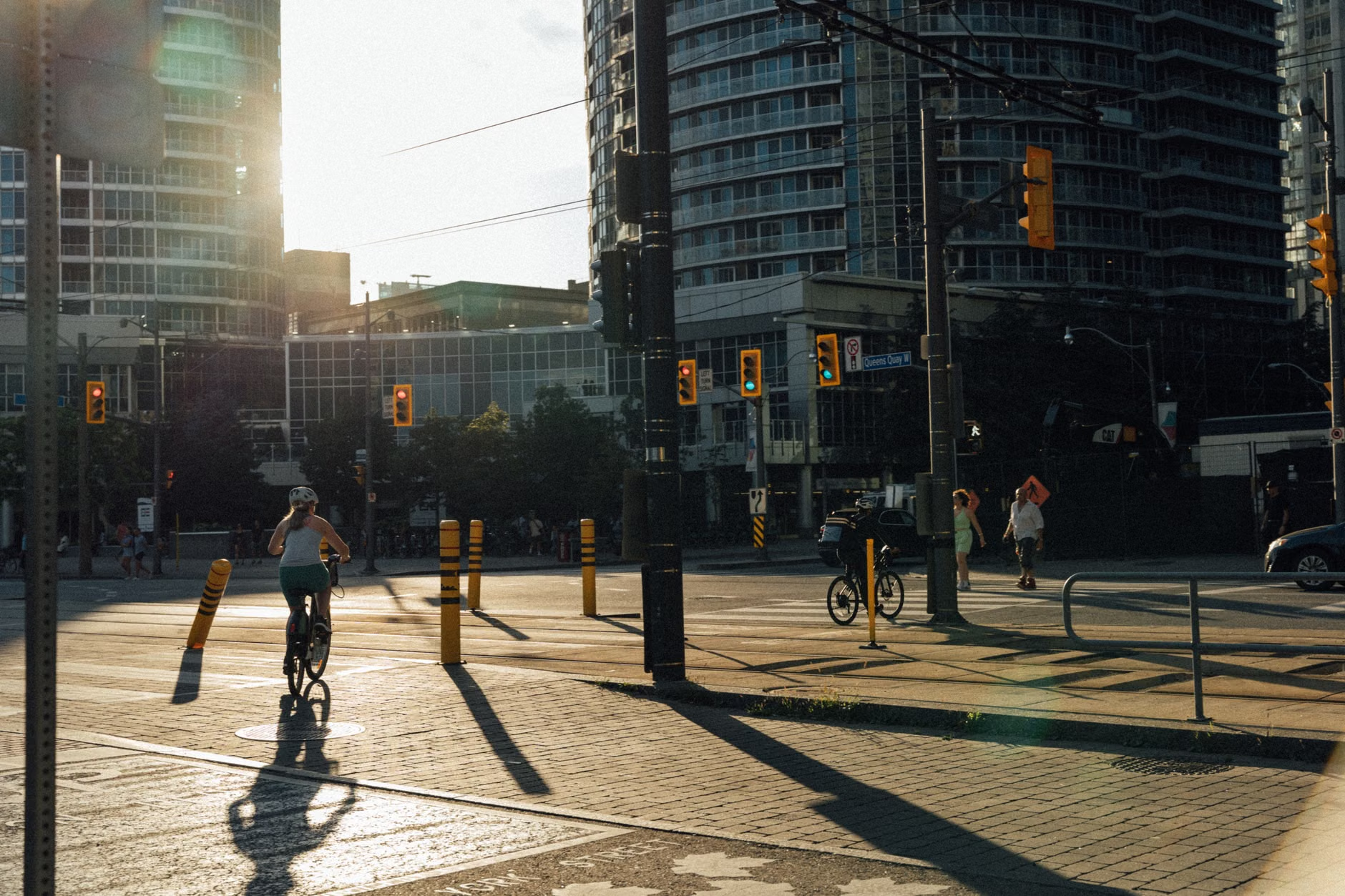
A safer bike commute usually comes from reducing surprises. Mechanical surprises lead to rushed decisions. Route surprises force awkward merges. Discomfort makes riders tense up and stop scanning ahead. The practical fix is not exotic gear or extra courage. It is a bike that behaves predictably, a route with manageable traffic stress, and a riding style that is easy for drivers, cyclists, and pedestrians to read. (nhtsa.gov)
Begin with a bike that behaves predictably
If the bike feels awkward, too large, or hard to stop, the commute will never feel relaxed. NHTSA’s guidance is simple: ride a bike that fits, because an oversized bike is harder to control, and do not head out on a bike with faulty brakes. A helmet should fit properly and be labeled as meeting the CPSC bicycle helmet standard. That does not eliminate risk, but it is a sensible baseline before worrying about faster tires, new clothing, or app-based route planning. (nhtsa.gov)
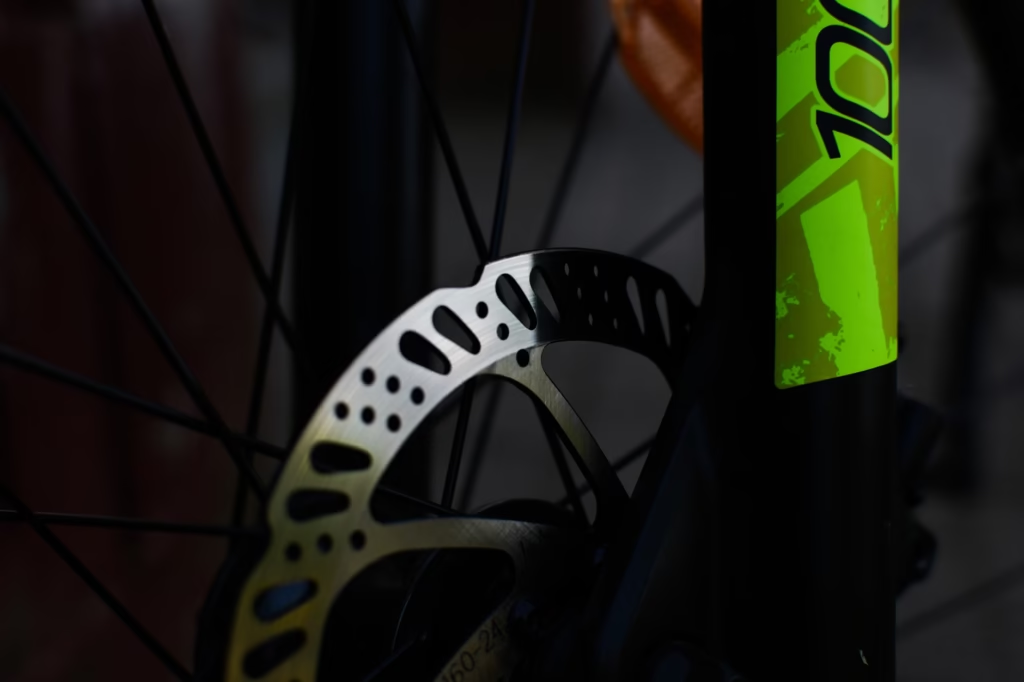
- Use a quick A-B-C check before rolling out: Air, Brakes, Chain. Check tire pressure and visible damage, squeeze the brakes to confirm they stop the bike, and make sure the chain is clean, lubricated, and moving freely. (nhtsa.gov)
- Make sure nothing on the bike is loose enough to interfere with steering or braking. A commuting setup should feel boring in the best way: stable, quiet, and easy to control. (nhtsa.gov)
- If you will be riding at night or when visibility is poor, use a white front light plus a red rear light and reflectors. Bright clothing helps in daylight; reflective gear matters more in low light. (nhtsa.gov)
One more commuting detail matters more than many beginners expect: cargo. NHTSA advises carrying items in a backpack or securing them to the bike rather than letting loose items interfere with control. Tuck laces and pant legs in as well. A commute becomes much more comfortable when you are not constantly thinking about a swinging bag, a laptop slipping sideways, or clothing drifting into the chain. (nhtsa.gov)
A slightly longer route can be the better commute
The shortest line on a map is often the worst way to get to work by bike. NHTSA specifically recommends choosing routes with less traffic and slower speeds when riding on the road, and notes that the safest route may be in a bike lane or away from traffic altogether. Its Bikeability Checklist offers a useful way to think about route choice: rate the ride based on traffic speed, available space, pavement quality, intersection difficulty, lighting, and whether the route actually goes where you need it to go. (nhtsa.gov)
- How fast does traffic feel, not just how fast is it posted? Heavy, fast-moving traffic raises stress quickly. (nhtsa.gov)
- Does bike space stay continuous, or does a shoulder or bike lane disappear exactly where traffic gets messy? (nhtsa.gov)
- Are the intersections easy to read? Long waits, poor sightlines, or awkward crossings can make an otherwise decent route frustrating and risky. (nhtsa.gov)
- What is the surface like? Potholes, debris, slippery markings, rough railroad crossings, and poor lighting all change how comfortable and safe a commute feels. (nhtsa.gov)
- Can you actually use the route day after day? The checklist specifically flags directness and hills because a route that is technically possible may still be a poor everyday commute. (nhtsa.gov)
A simple hypothetical example makes the tradeoff clear. A direct arterial route may save a few minutes, but if it includes fast traffic, disappearing bike space, and two difficult right-turn intersections, it may be the wrong commute. A neighborhood route or shared path that adds a little distance can still be the better choice if it lowers conflict points and lets the rider stay calm and consistent. The nuance is that a path is not automatically better if it ends abruptly or feeds into difficult crossings, so test the whole route, not just the nicest segment. (nhtsa.gov)
Be easy to read in traffic
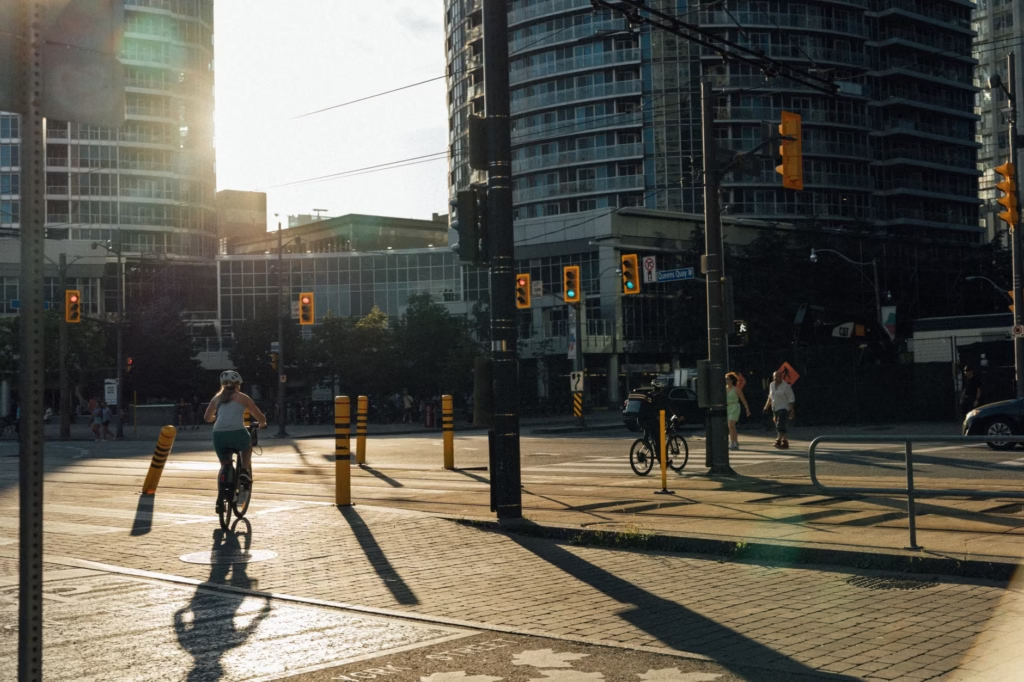
When traffic is around, predictability matters. NHTSA advises riding in the same direction as traffic, obeying signs and signals, staying alert, and looking ahead for hazards. The Bikeability Checklist also treats straight-line riding, signaling turns, helmet use, and night lighting as concrete actions that can make a ride safer. In practice, that means fewer sudden swerves, fewer last-second lane changes, and less weaving around parked cars or curbside obstacles. (nhtsa.gov)
This is where some commuters over-focus on visibility gear and under-focus on behavior. Lights and reflective materials help, but they do not replace a steady line and clear intentions. If the choice is between preserving speed and being legible to everyone around you, legibility is usually the better call. Likewise, distraction is a comfort issue as well as a safety issue. NHTSA explicitly warns against texting or using anything that takes your eyes, ears, or mind off the road and traffic. (nhtsa.gov)
Make the trip repeatable, not heroic
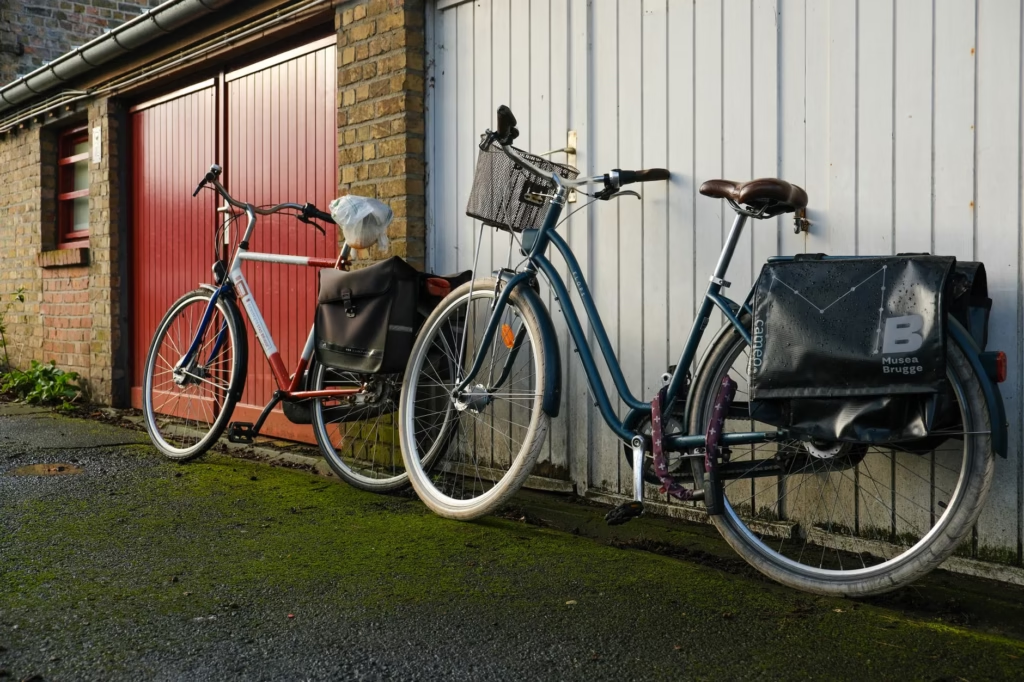
Comfort is not a luxury add-on. A commute that leaves the rider frazzled, overly sweaty, or physically spent by the halfway point is hard to repeat safely. The Bikeability Checklist explicitly tells riders to choose routes that match their skill level and physical ability, and to change routes if one is too long or too hilly. That is useful permission to stop treating every commute like a test. If a calmer route, an easier pace, or a more secure way to carry gear makes the trip sustainable, that is not laziness. It is good commute design. (nhtsa.gov)
For new or returning commuters, the smartest first week is often a soft launch: test the route when you are not rushed, learn where the difficult crossings are, and build routine before adding speed. A bike commute does not need to feel effortless on day one, but it should feel controllable. If it does not, the answer is usually to simplify something: the route, the cargo, the pace, or the bike setup. (nhtsa.gov)
The best bike commute is rarely the boldest one. It is the one that works on an ordinary Tuesday: a bike in good shape, a route you trust, and habits that make the ride calmer every week. Build around that, and safety and comfort stop feeling like separate goals.
References
- NHTSA – Bicycle Safety – https://www.nhtsa.gov/road-safety/bicycle-safety
- NHTSA – Pre-Ride Safety Check – https://www.nhtsa.gov/document/bike-safety-pre-ride-bicycle-safety-check
- U.S. Consumer Product Safety Commission – Bicycle Helmets Business Guidance – https://www.cpsc.gov/Business–Manufacturing/Business-Education/Business-Guidance/Bicycle-Helmets
- NHTSA – Bikeability Checklist – https://www.nhtsa.gov/document/bikeability-checklist
