
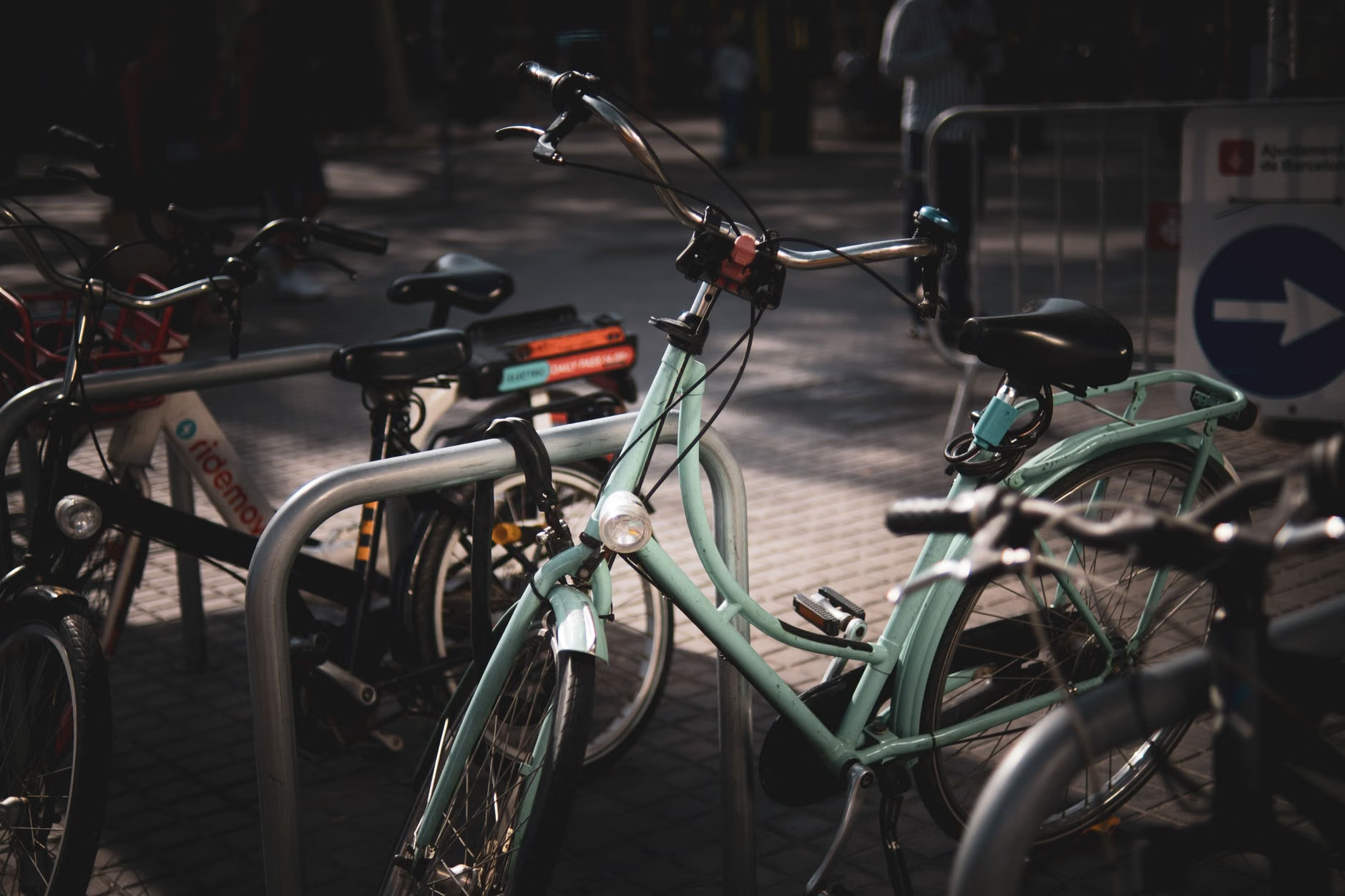
Most disappointing bike purchases are not about the brand. They are about mismatch. A fast-looking road bike can feel harsh on a pothole-heavy commute. A soft, upright comfort bike can feel sluggish if the real goal is brisk after-work fitness riding. And a mountain bike that feels secure in the parking lot can turn ordinary pavement into unnecessary effort.
The right choice is the bike that matches the rides you will actually do: your surfaces, pace, cargo, storage, and tolerance for maintenance. NHTSA emphasizes that a bike should fit the rider and be easy to control, and the League of American Bicyclists notes that many kinds of bikes can work for commuting if they are comfortable and in good working order (NHTSA).
For most adults shopping for commuting, fitness, or casual weekend rides, the realistic shortlist is smaller than bike marketing makes it seem. In practice, the best starting points are usually a commuter or city bike, a hybrid or fitness bike, an endurance road bike, a gravel bike, a hardtail mountain bike for rougher use, or an e-bike if distance, hills, or cargo change the equation. The key is not finding the most versatile bike on paper. It is deciding which compromises will still feel acceptable on an ordinary Tuesday morning.
- Start with the rides you will actually do, not the bike category you admire
- A practical comparison of the bike types most shoppers should consider
- Body position and tires usually matter more than frame material
- The commuter details that become important after the first week
- When an e-bike is the smarter choice, not a compromise
- Fit is not optional
- A five-step test ride that reveals more than the spec sheet
- Common mistakes that lead to buyer’s remorse
- How to make the final call
- FAQ
- References
TL;DR
- Buy for the riding you will do most often, not the ride you imagine doing a few times a year.
- For mixed commuting, fitness, and easy weekend use, hybrid, commuter, and gravel bikes are usually the strongest starting points.
- Fit is nonnegotiable: you should comfortably reach the pedals and brakes, with a soft bend in your arms and a slight bend in your leg at the bottom of the pedal stroke (NHTSA).
- If hills, long distance, cargo, or arriving less sweaty matter a lot, an e-bike may be the more useful choice (CPSC).
- Buy a helmet at the same time you buy the bike, and make sure it carries the required CPSC certification label for bicycle helmets sold in the US (CPSC).
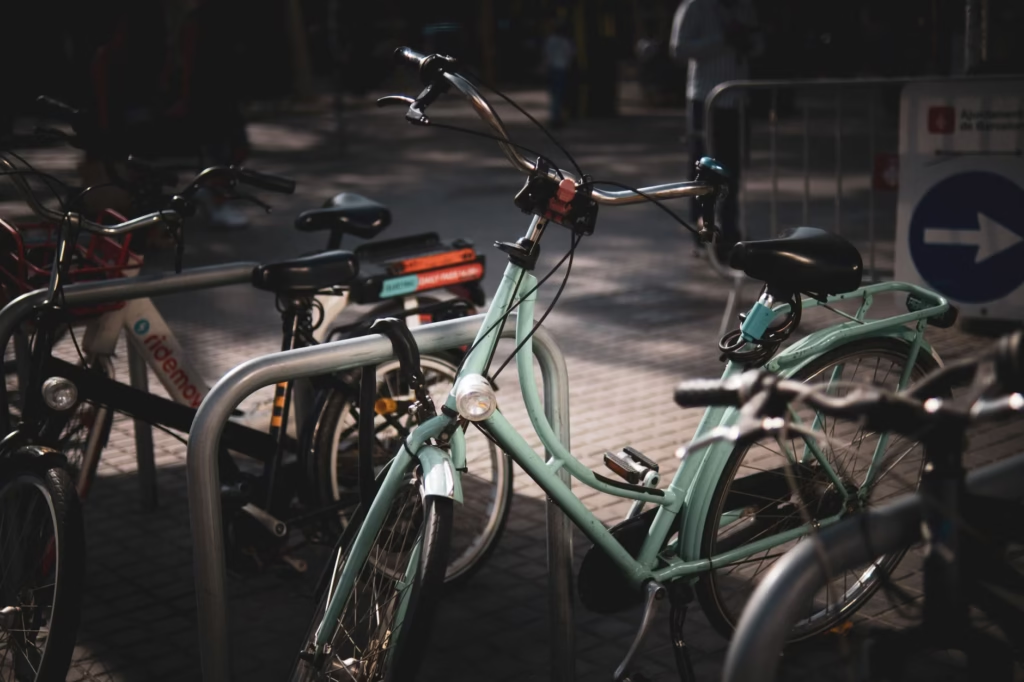
Start with the rides you will actually do, not the bike category you admire
A simple decision rule helps here: use the 80 Percent Bike Rule. Choose the bike that best suits the kind of riding likely to account for roughly 80 percent of your miles, then check whether it can handle the remaining 20 percent without becoming annoying. This works better than chasing a mythical bike that does everything equally well, because every bike category is built around a set of tradeoffs: speed versus comfort, stability versus agility, utility versus weight, and simplicity versus gear range.
Take a hypothetical rider with a 5-mile each-way city commute, a laptop to carry three days a week, and occasional 20- to 30-mile weekend rides on paved paths and crushed-gravel rail trails. A pure road bike might sound appealing, but a hybrid or gravel bike often makes more sense because it balances comfort, carrying options, and moderate efficiency. On the other hand, a rider whose main goal is longer paved fitness rides with little cargo and smooth roads may be happier on an endurance road bike, even if it is less convenient for errands. The category follows the routine, not the other way around.
A practical comparison of the bike types most shoppers should consider
| Bike type | Typical feel | Usually best for | Main compromise |
|---|---|---|---|
| City or commuter bike | Upright position, stable steering, easy to live with, often rack- and fender-ready | Daily commuting, errands, short relaxed weekend rides | Usually heavier and slower when rides get longer or faster |
| Hybrid or fitness bike | Neutral posture, flat bar, medium-width tires, balanced handling | Mixed commuting, paved-path fitness, all-purpose recreational riding | Less aerodynamic than road or gravel bikes, and some models have limited cargo features |
| Endurance road bike | Efficient on pavement, multiple hand positions, quicker feel at speed | Longer paved fitness rides, smooth-road commutes, spirited weekend rides | Can feel less relaxed in stop-and-go traffic and may be less practical for cargo |
| Gravel bike | Stable drop-bar bike with wider tires and room for mixed surfaces | One-bike solution for pavement, rough roads, and rail trails | Often pricier than hybrids and not as upright as some casual riders expect |
| Hardtail mountain bike | Very stable, wide tires, often front suspension | Broken pavement, rough paths, dirt riding, occasional real trail use | Knobby tires and suspension can feel slow and inefficient on everyday pavement |
| Commuter e-bike | Usually upright and practical, with motor assist that reduces effort | Longer commutes, hills, cargo, arriving less sweaty, replacing more car trips | Heavier, more expensive, needs charging, and raises storage and theft concerns |
If the choice still looks muddy after a comparison like this, focus on the ride environment. If your trips are mostly city streets and bike paths, start with commuter, hybrid, or e-bike options. If speed and distance on pavement matter most, move road or gravel higher on the list. If the pavement where you live is terrible or your weekend rides regularly leave the pavement, gravel or hardtail options deserve stronger consideration. The right answer becomes much clearer when route conditions, not bike identity, drive the decision.
Body position and tires usually matter more than frame material
Many first-time buyers obsess over aluminum versus steel versus carbon before they understand riding position. In real-world comfort, posture often matters far more. A more upright position can improve confidence in traffic, reduce neck strain, and make frequent stops easier. A longer, lower position can improve efficiency and feel better at higher speeds, but only if the rider is comfortable sustaining it. NHTSA’s bike-fit guidance is basic but useful: you should be able to sit in a comfortable position, keep a soft bend in your arms, and reach the brakes without stretching or squeezing awkwardly (NHTSA).
Tires are just as important. For commuting and casual fitness riding on pavement, moderately wider tires usually add more comfort and control than an entry-level suspension fork. They can take the edge off cracked asphalt, train tracks, and rough shoulders without the weight and complexity of cheap suspension. Flat bars tend to feel more intuitive in low-speed traffic and frequent starts. Drop bars usually offer better efficiency into the wind and more hand positions on longer rides. Neither is automatically better; they suit different habits and priorities.
The commuter details that become important after the first week
- Carrying capacity matters more than many buyers expect. If a laptop, lunch, change of clothes, or groceries will travel with you, rack mounts and bag options are not extras. They are part of the bike choice.
- Fenders are worth prioritizing for regular commuting in mixed weather. The League of American Bicyclists specifically recommends weather protection such as fenders and a rack for carrying capacity on commuter setups (League of American Bicyclists).
- Lighting should be part of the plan from day one, not an afterthought. NHTSA recommends a white front light, a red rear light, and reflectors when riding at night or when visibility is poor (NHTSA).
- Lower gearing is often more useful than a big top gear on real commutes, especially where there are hills, repeated stop signs, or heavy loads.
- Disc brakes are especially appealing for wet weather, hills, and stop-start city riding, though well-set-up rim brakes can still work fine on budget-conscious bikes.
Also think beyond the ride itself. A bike that feels fine in a showroom can feel very different when it has to be carried up apartment stairs, squeezed into an office corner, locked outside, or lifted onto a transit rack. Weight, attachment points, tire clearance, and quick-release parts all affect daily ownership. Commuters should evaluate storage, parking, and security at the same time they evaluate speed.
When an e-bike is the smarter choice, not a compromise
An e-bike is not simply a regular bike with a battery strapped on. In CPSC guidance, a bicycle can include a two- or three-wheeled vehicle with fully operable pedals and an electric motor under 750 watts whose motor-only speed on level pavement is less than 20 mph. Many states and cities also use a three-class framework. California’s vehicle code, a useful example of that common system, defines Class 1 and Class 2 e-bikes at up to 20 mph assist and Class 3 at up to 28 mph assist, with additional equipment requirements such as a speedometer for Class 3 (CPSC).
From a buying perspective, the useful question is not whether the motor feels purist enough. It is whether assist solves a real problem: distance, hills, cargo, time pressure, heat, physical limitations, or a desire to replace more car trips. For some riders, an e-bike is the difference between riding regularly and not riding much at all. The caution is that e-bike rules are not identical everywhere. PeopleForBikes notes that electric bicycle laws differ by state, and access rules can also vary by local agency or path operator (PeopleForBikes).
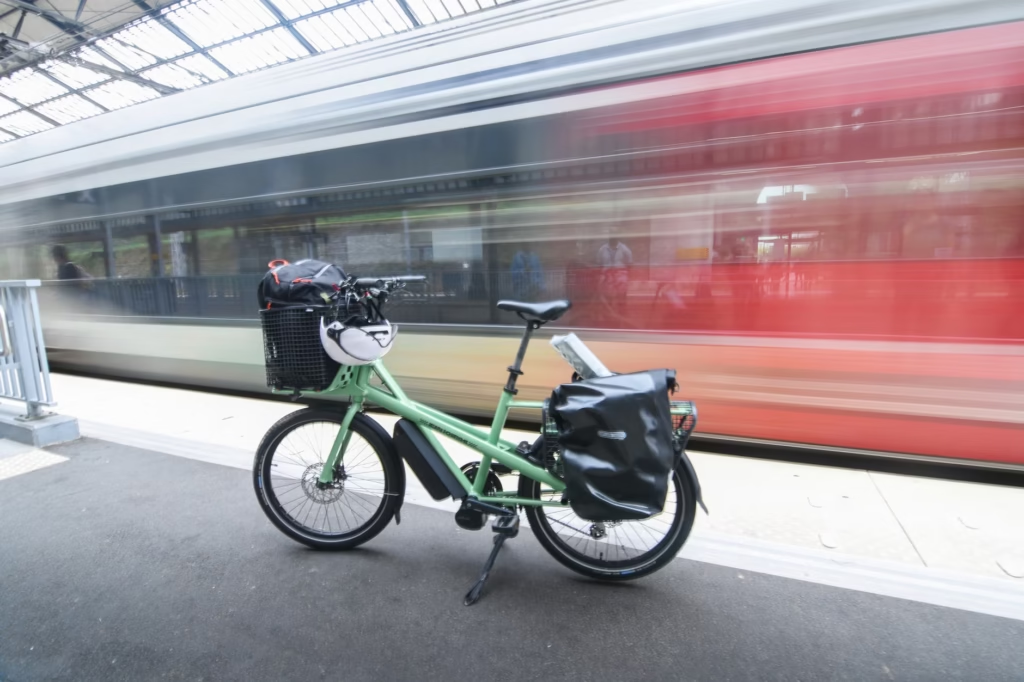
Before buying an e-bike for commuting or path use, check state and local rules on where the class you want can ride, and whether there are age or helmet requirements. NHTSA also reminds riders that bicycles on the road are generally expected to follow traffic rules (NHTSA).
Fit is not optional
If the size is wrong, the category almost stops mattering. NHTSA’s fit guidance says the rider should be able to reach the pedals while seated, easily grip the brakes, and maintain a comfortable riding position. When straddling the bike with feet flat on the ground, there should usually be at least 1 to 2 inches between the rider and the top tube, though some riding styles may need more. Saddle height should allow a slight bend in the leg at the bottom of the pedal stroke (NHTSA).
Bad fit announces itself quickly on a test ride: locked elbows, cramped shoulders, numb hands, too much weight on the wrists, front-of-knee pain, or an uneasy feeling every time you stop. Do not buy a bike simply because a salesperson says a future stem swap will fix everything. Small adjustments can fine-tune a good fit. They do not turn the wrong frame into the right one.
A bike purchase is also a safety purchase. CPSC says bicycle helmets sold in the US must meet the federal bicycle-helmet standard in 16 CFR Part 1203 and carry a certification label. The same guidance also warns that helmets damaged in an impact may no longer protect properly even if the damage is not obvious (CPSC).
A five-step test ride that reveals more than the spec sheet
If possible, test ride two or three categories back to back. NHTSA stresses fit and control, and the League recommends considering traffic volume, road conditions, terrain, and route choice for commuting. A short but deliberate ride tells you more than an hour of online comparison (NHTSA).
- Ride in normal shoes and, if commuting is the goal, imagine the clothes and bag you will actually use.
- Start easy. Check whether you can cover the brakes comfortably, sit without reaching, and look around without neck strain.
- Find a hill or simulate a stoplight restart. Easy starts matter more in daily use than top-end speed.
- Roll over rough pavement. Notice whether the bike feels planted, twitchy, harsh, or pleasantly dull in a good way.
- Practice a shoulder check, a one-hand signal, and a tight turn. A commuter or fitness bike should feel predictable, not dramatic.
Common mistakes that lead to buyer’s remorse
- Buying for fantasy rides. A bike chosen for a once-a-month ambition ride often underperforms on the six rides each week that actually happen.
- Mistaking a very aggressive fit for speed. If the position discourages frequent riding, the theoretical performance advantage does not matter.
- Choosing knobby tires and suspension for mostly paved riding. Unless the route is genuinely rough, that setup can add drag and maintenance without adding much benefit.
- Ignoring cargo and clothing. Many riders discover too late that a backpack gets old fast and that fenders would have changed the whole experience.
- Assuming every e-bike can ride everywhere a regular bike can. Class rules and access rules vary (PeopleForBikes).
- Assuming any cheap online bike is equivalent to a properly supported shop bike. CPSC bicycle requirements cover areas such as assembly, braking, structural integrity, and reflectors, but quality control, assembly, and parts support still vary widely in the real market (CPSC).
How to make the final call
Write down five things before you buy: route surface, average distance, hills, what you need to carry, and how hard you want the average ride to feel. Then use the 80 Percent Bike Rule and narrow the field to two or three categories. If one bike feels slightly faster but another feels easier to live with, the second option is often the smarter long-term choice. Bikes that get ridden regularly win. Bikes that merely sound ideal in a product description do not.
FAQ
Is a hybrid bike good enough for fitness riding?
Usually, yes. For many riders, a hybrid or fitness bike is enough for consistent cardio, moderate speed, and longer paved-path rides. The main reasons to move to an endurance road or gravel bike are usually higher average speeds, longer distances, or a stronger preference for drop bars and a more efficient position.
Should I commute on a road bike?
A road bike can be a very good commuter if the route is smooth, the cargo is light, and speed matters more than utility. It becomes a less obvious choice when the commute involves rough pavement, frequent stops, wet weather, or a need for racks, fenders, and easier everyday handling.
Do I need front suspension for city riding?
Most city riders do not. For paved commuting and casual weekend rides, tire choice, tire pressure, and riding position usually make a bigger difference than an entry-level suspension fork. Suspension becomes more worthwhile when the route is truly rough or includes regular dirt or trail riding.
How do I know whether an e-bike is legally an e-bike?
Start with the basics: fully operable pedals, the motor rating, the assist speed, and the class label if your state uses the class system. CPSC’s guidance includes the federal low-speed definition used in consumer product regulation, and state law may add class labels or access rules. California’s code is a clear example of how Class 1, 2, and 3 bikes are defined, but riders still need to check their own state and local rules (CPSC).
Is one do-everything bike better than owning separate bikes?
For most shoppers, yes. A versatile hybrid, commuter, gravel bike, or practical e-bike is usually a smarter first purchase than trying to build a collection around very specific uses. Separate bikes start making sense when your needs genuinely conflict, such as fast group road rides on one hand and heavy-duty daily cargo commuting on the other.
References
- NHTSA: Bicycle Safety – https://www.nhtsa.gov/road-safety/bicycle-safety
- NHTSA: Fitting a Bike – https://www.nhtsa.gov/sites/nhtsa.gov/files/2024-07/bike-safety-fitting-a-bicycle.pdf
- CPSC: Bicycles FAQ – https://www.cpsc.gov/FAQ/Bicycles
- CPSC: Bicycle Helmets Business Guidance – https://www.cpsc.gov/Business–Manufacturing/Business-Education/Business-Guidance/Bicycle-Helmets
- League of American Bicyclists: Commuting – https://bikeleague.org/ridesmart/commuting/
- PeopleForBikes: Policies and Laws – Electric Bikes – https://www.peopleforbikes.org/electric-bikes/policies-and-laws
- California Vehicle Code § 312.5 – https://leginfo.legislature.ca.gov/faces/codes_displaySection.xhtml?lawCode=VEH§ionNum=312.5.
