
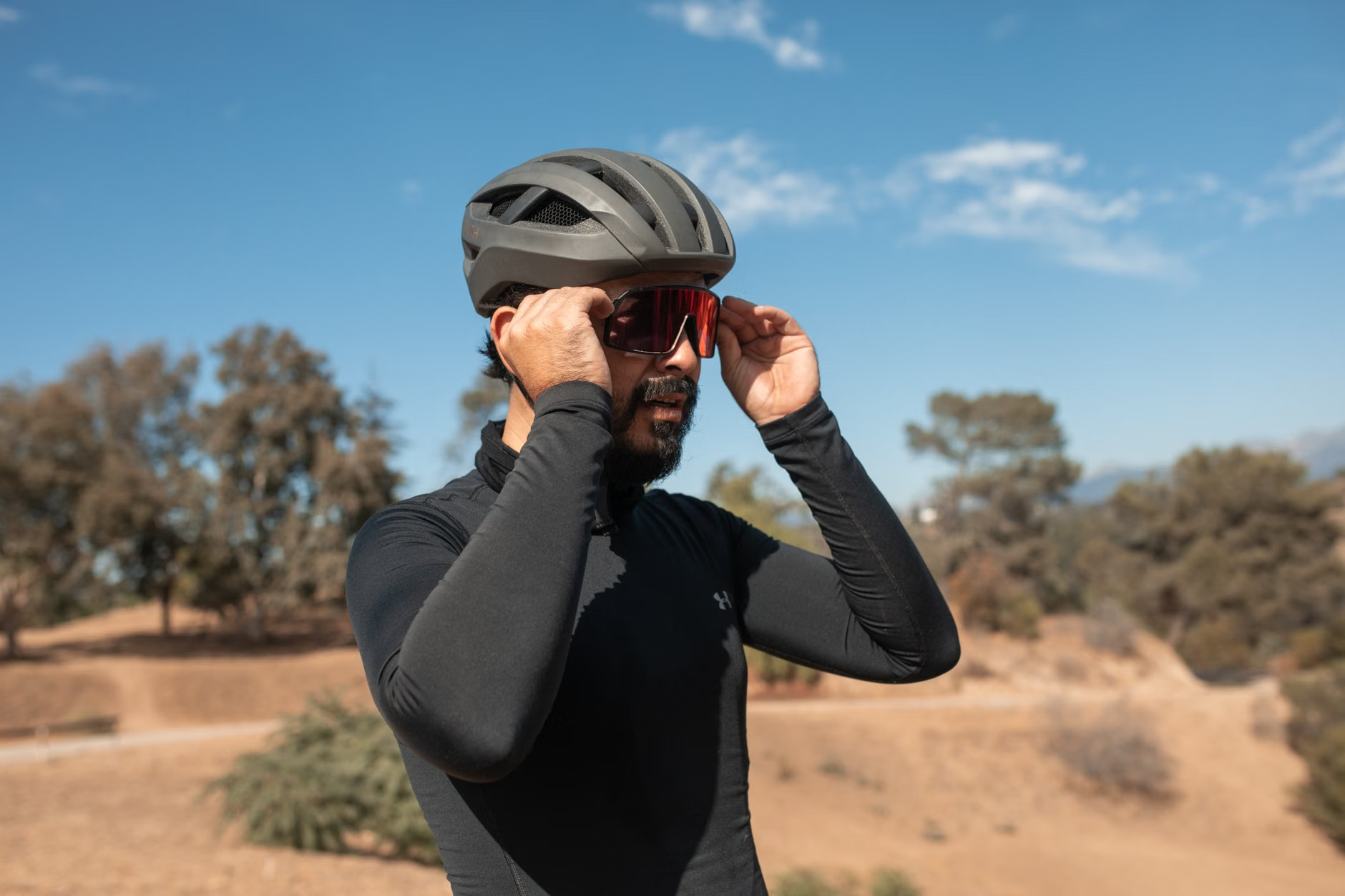
A good bike helmet is not the one with the loudest marketing. It is the one that is certified for bicycling, fits your head correctly, and stays in place when the chin strap is fastened. In the U.S., the basic checkpoint is a CPSC certification label, and both CPSC and NHTSA make the same practical point: if the helmet is loose, tilted, or the wrong type for the activity, it will not protect as intended. (cpsc.gov)
Buy the label and the fit before you compare anything else
Start by ruling out any helmet that is not clearly meant for bike riding. CPSC advises buyers not to rely on appearance or packaging claims alone, and its helmet guidance specifically tells shoppers to look for the label showing compliance with the applicable standard. For a bike helmet, that means CPSC certification for bicycling.
After that, fit becomes the real decision point. A plain certified helmet that sits correctly is a smarter purchase than a premium model that rocks on your head or leaves the forehead exposed. (cpsc.gov)
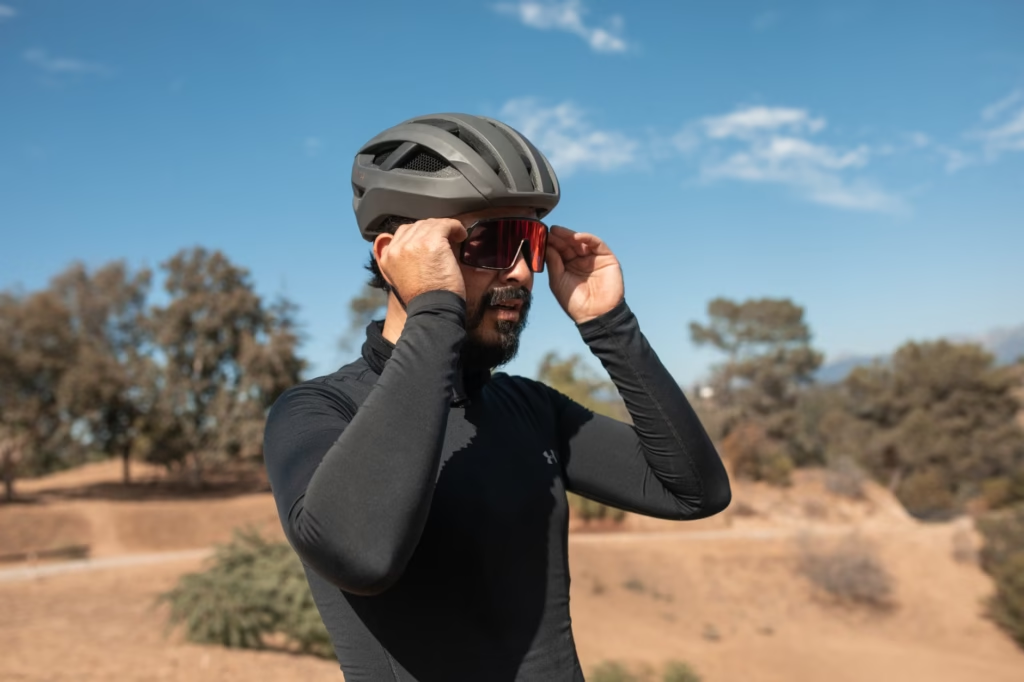
- Measure first, then try on. CDC recommends measuring around the head just above the eyebrows and ears, and it notes that sizing varies between brands. For a child, buy the helmet that fits now, not one to “grow into.” (cdc.gov)
- Set the helmet level, not tipped back. The front should sit low enough to cover the forehead, roughly one or two finger widths above the eyebrows. (cdc.gov)
- Adjust the side straps into a V shape. The straps should meet just below the ears in a clean V. If they wander behind the ears or sit too loose, the helmet is more likely to shift in a crash. (cdc.gov)
- Buckle the chin strap snugly. Only one or two fingers should fit underneath. A simple CDC and NHTSA check is to open your mouth wide; the helmet should pull down slightly when the strap is tight enough. (cdc.gov)
- Do a movement check before buying. Once fastened, the helmet should not slide side to side or front to back, and it should not block forward or side vision. (cdc.gov)
If a helmet still will not sit securely after using the included pads or adjustment system, move on to another model. CPSC explicitly warns against adding extra padding or making changes not described by the manufacturer, and CDC notes that a too-tight helmet can cause headaches. A proper fit should feel snug all around, not unstable and not painfully tight. (cpsc.gov)
The safety features worth caring about after the helmet already fits
Once certification and fit are settled, compare the details that help the helmet stay properly positioned on real rides. An adjustable fit ring or removable padding matters because head measurements only get you close; fine adjustment is often what turns a decent fit into a stable one.
Comfort matters more than it sounds, too. NHTSA notes that riders are more likely to wear a helmet they find comfortable, and CDC stresses that the helmet should be worn consistently and correctly. In other words, convenience is not fluff if it helps the helmet get used on every ride. (cdc.gov)
- Look for adjustment range, not just padding. A helmet with a usable rear dial or fit system is easier to fine-tune when the rider changes from a thin cap to a bare head, or after a haircut. CDC specifically notes that helmets may use removable pads or an adjustable fit ring for this purpose. (cdc.gov)
- Treat extra impact-management technology as a secondary filter. CDC says no helmet is concussion-proof, and Virginia Tech’s testing helps explain why extra comparison data can still be useful: certified helmets meet minimum standards, but they do not all perform identically in additional impact testing. (cdc.gov)
- Use independent ratings as a tie-breaker. Virginia Tech’s bike helmet ratings are designed to compare protection beyond simple pass/fail certification, which makes them more useful than relying on marketing language alone. (helmet.beam.vt.edu)
The most expensive mistakes are usually small fitting mistakes
Most helmet errors do not look dramatic. The rider is technically wearing one, but it sits too high, the straps are slack, or the shell shifts every time the head turns. That is why the fit check matters more than color, visor style, or brand prestige.
Another frequent mistake is assuming a helmet that feels loose in the store can be fixed later. Usually, if the basic shell shape and size are wrong, the rider ends up living with a poor fit. (cdc.gov)

- Buying a bigger helmet for a child to grow into. NHTSA’s guidance is direct: buy the helmet for the head size now, not later. A loose helmet is not a good value if it cannot stay in position. (nhtsa.gov)
- Assuming a skate-style or “multi-use” shell is automatically okay for bike riding. CDC notes that some multi-use helmets can be used for biking, but only if they carry a CPSC label certifying them for bicycling. (cdc.gov)
- Keeping a helmet after a crash because it still looks fine. CPSC and CDC both warn that bicycle helmets are generally intended to manage one serious impact, and the foam may be damaged even when the shell does not show obvious cracks. (cpsc.gov)
- Painting it, covering it with stickers, or adding decorative attachments without manufacturer approval. CPSC and CDC both caution that extra materials or parts can affect performance. (cpsc.gov)
If budget forces a choice, spend on verified certification and stable fit first. A simpler helmet that sits level, clears your vision, and stays snug is a better buy than a feature-heavy model worn loose on the back of the head. Once several helmets meet that standard, compare comfort, adjustment range, and independent test results. (cpsc.gov)
References
- U.S. Consumer Product Safety Commission – Which Helmet for Which Activity? – https://www.cpsc.gov/s3fs-public/349-WhichHelmetBrochure_1-6-2026_WEB_508.pdf?VersionId=pgGWQAaMJs94IPIG7e0t9m.vCLUF4kAe
- Centers for Disease Control and Prevention – Bike Helmet Fact Sheet – https://www.cdc.gov/heads-up/media/pdfs/helmets/HeadsUp_HelmetFactSheet_Bike_508.pdf
- National Highway Traffic Safety Administration – Fitting Your Bike Helmet – https://www.nhtsa.gov/sites/nhtsa.gov/files/8019_fitting-a-helmet.pdf?desktop=
- Virginia Tech Helmet Ratings – https://www.helmet.beam.vt.edu/
