
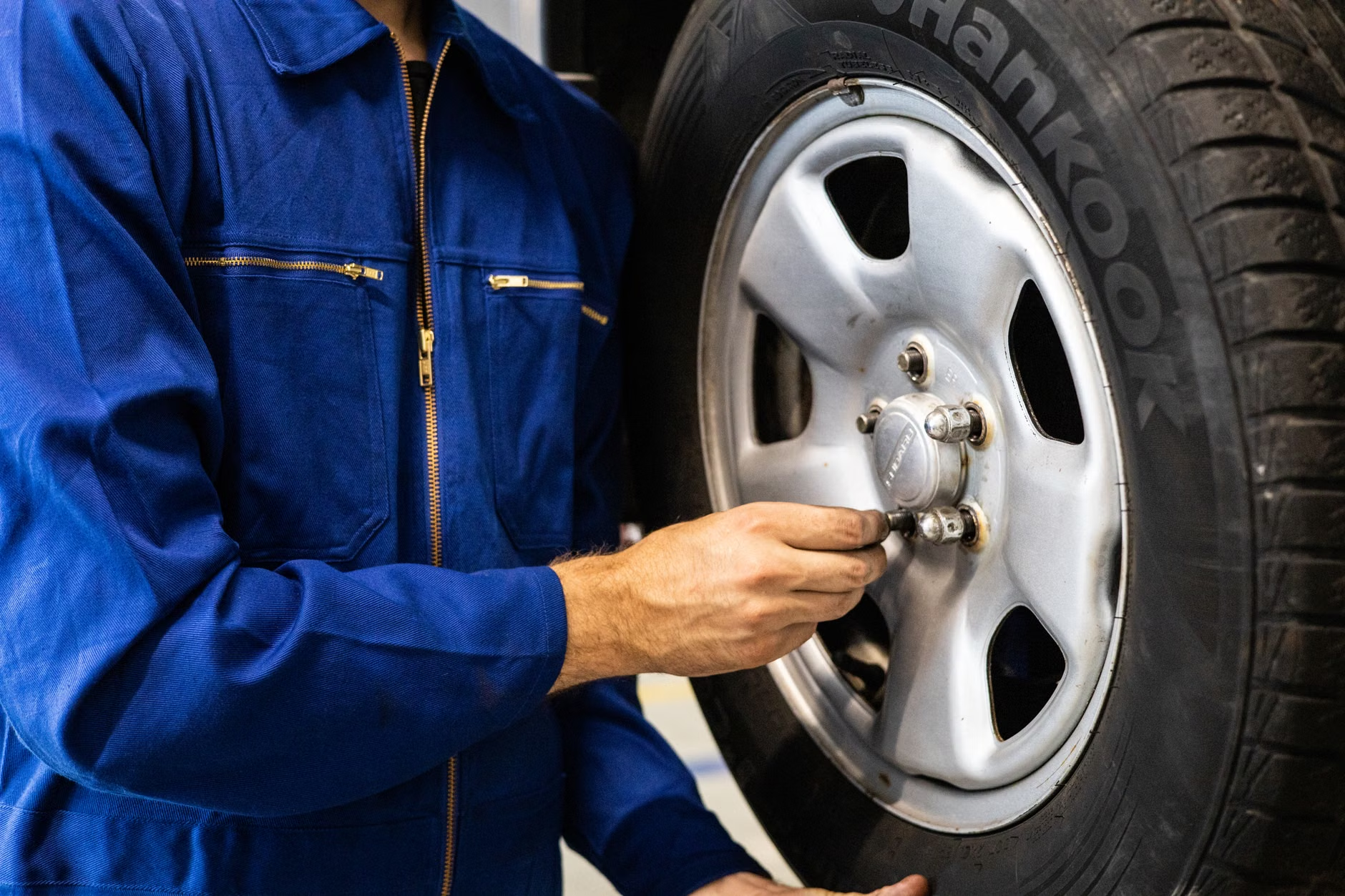
There are some issues I wouldn’t clear for riding just because a wheel still spins without rubbing. I would first check to see if the wheel is securely attached and if there isn’t any damage. After that, I would look to see if there is movement of the rim in relationship to the tire. Then, there is movement in the hub in relationship to the rim. Those observations will indicate what is wrong and “tightening some spokes” skips most of the important questions.[1][2][4]
These findings mean the ride waits
- Looseness in the attachment of the wheel to the bicycle.
- A bulge in the sidewall of the tire, exposed tube, or lifted bead.
- Rim damage like a sharp rim edge, a worn out brake surface, or a damaged spoke hole.
- A broken or very loose spoke.
- Wheel knocking, or sideways movement after the wheel is secured in place.
Don't go for a test ride to see if one of these gets worse. Loose wheels can detach. Damaged tire containment systems and wheel parts can fail. Assess damaged wheel parts, don't straighten them. A bulge, exposed tube, or a lifting bead means the tire should not be inflated any further, and the tire should be removed and the wheel inspected. A wheel that is insecure means that the tire may come off and should be transported.[1][6][7]
Check the attachment before blaming the wheel
Have a look at the ends of the axles where they are seated in the drop outs. A quick release lever is held closed by a cam. You can't secure it by turning it like a wing nut. Thru-axles need to be fully engaged and set to the appropriate torque. Axle nuts also need to set to a specific torque. There is no universal torque setting.[1]
If the wheel was just removed, I would check its seating and seat the tire bead before adjusting the brakes or spokes. You don't know how the attachment is locked, leave it parked. The attachment needs to be checked to see if it is locked and functioning correctly. If it is not locked, it probably never will be.[1]
Rock it while stopped, then watch it turn
After correct attachment, hold the stationary rim and gently rock it sideways while checking the hub and axle. You’re listening for a knock or free movement. Look for side-to-side flex. That movement can be from a loose bearing, or a bad connection between the bearing and the axle or end caps. You will find loose play this way, but you won’t find the reason it’s loose. The hub or the attachment may need to be assessed before riding, depending on the condition of the play.[1][4]
A quick release exception: some hubs, like cup and cone quick releases, may have play that is taken up with the quick release is properly closed. This doesn’t give you permission to ignore play or over-tighten the axle.[4]
Finally, lift the bike up enough to take the wheel off the ground. Turn the wheel by hand. Keep your fingers, clothes and other things clear of the spokes, rotors and pads. Watch the edge of the rim against a point of reference that doesn’t touch it. Rim-brake pads are a good place to attach a level. For the test, ignore anything on the tire. Once again, this isn’t a riding test. Just stop, get a level, and set it where you need to.[2][3]
If you have a sideways gap, then you have lateral rim runout. If a rim rises and falls against a reference near its outer edge, then that’s radial runout. Neither lateral nor radial runout is the same as a stopped wheel that knocks when rocked. Similarly, if the tire wanders or hops, then the problem probably isn’t the spokes.[2][3][4]
When the tire moves but the rim doesn’t
Imagine that I am in a situation after repairing a flat. My pump is back in my bag. I’m already late. I spin the tire and it hops. I’m considering the quickest adjustments. Before grabbing for tools, however, I always compare my rim to the tire’s seating line. This is to determine what has moved.
A molded seating line, if present, is usually located above the rim on each sidewall. It should be an even distance from the rim all the way around. A section of the sidewall that comes close to the rim indicates that the tire is not evenly seated on the rim. Printed graphics on tires usually aren’t reliable to determine whether a tire is properly seated on the rim.[5]
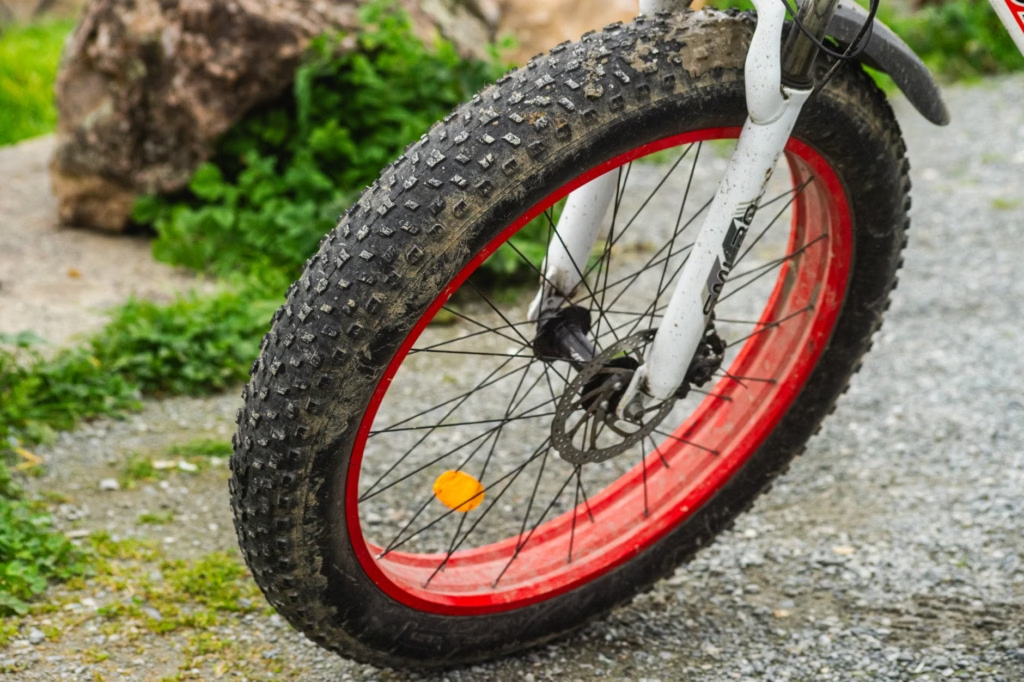
For a bead that’s not properly seated, first deflate the tire and check the mounting for bead damage, or for a tube that’s trapped under the bead. An undamaged tire may need centering at low pressure. Constant pressure can’t replace the inspection. Stay within both rim and tire restrictions. Recheck the seating lines and the shape of the tire. If it’s still out of shape, do not ride. Mounting and tire issues need further inspection.[5][6][7]
An even seating line doesn’t always settle the case. Tire wobble can be caused by a misshapen casing. In this case, it’s the casing that needs inspection, not the rim. Finding that the rim runs true can’t always be assumed that the tire is safe for use.[2][6]
A straight-looking rim can still have a problem
Spokes can break or become slack, or the area around the attachment point can become distorted. Check for cracks and/or material fatigue. Impact damage can cause the rim to become ovalized. On a rim-brake wheel, compare the brake surface to the wear limit or indicator. If it meets the limit, but is worn or damaged, that’s cause for not riding the wheel.[1][7]
I wouldn’t adjust the spoke that feels “looser.” Many wheels have different tensions on both sides and squeezing spokes can’t confirm that their tension is correct. Straightness and tension are different. A wheel can be true and still have high tension and a bent rim can’t be adjusted with spokes. Have both the tension and the rim condition checked instead of just having the wobble removed.[3]

Does a small wobble mean you can ride?
Size and brake clearance alone won’t always indicate a problem. Rim-brake rub can show sideways runout, but opening the brake doesn’t fix it. A disc rotor can still clear its pads and the rim can still wobble. Just because you see a little gap with the wheel unloaded doesn’t mean there won’t be a problem with load, tension, or something else hidden.[1][2][3]
I can’t give you a millimeter allowance for runout. Slight runout doesn’t always mean it’s about to fail. I wouldn’t recommend riding a rim with wobble, especially if the condition and tension of the wheel is unknown. Recheck attachment, play, and slow-spin checks if you corrected the seating problem. An unresolved finding keeps the ride on hold.[1][3][4][5]
If it needs repair, tell the mechanic what you saw. If there is a sideways shift of the rim, let them know “the rim shifts sideways once per turn” or “the tire seating line dips in one spot” if the wheel is secured, “the secured wheel knocks when rocked.” If there is anything recent that could have impacted the wheel, let the mechanic know. You don’t need to know the exact cause of failure to ask for it to be repaired. Those observations help provide a more accurate starting place than “it wobbles.”
Sources and references
- Trek Bicycle: Trek Bicycle Owner’s Manual, US English, Revision 6 (2026-04)
- Park Tool: How Wheel Truing Works
- Park Tool: Wheel Truing (Lateral & Radial) (2021-03-31)
- Park Tool: Hub Overhaul and Adjustment: Cup and Cone Style
- Schwalbe: Bike Tire Fitting
- Continental: Bike tire maintenance
- DT Swiss; manufacturer document hosted by RABE Bike: DT Swiss Wheels User Manual V2024.05, safety excerpt (2024-05)